Showing posts with label world building. Show all posts

Friday, July 22, 2022

D&D 4: The Fallcrest Campaign, Part 1

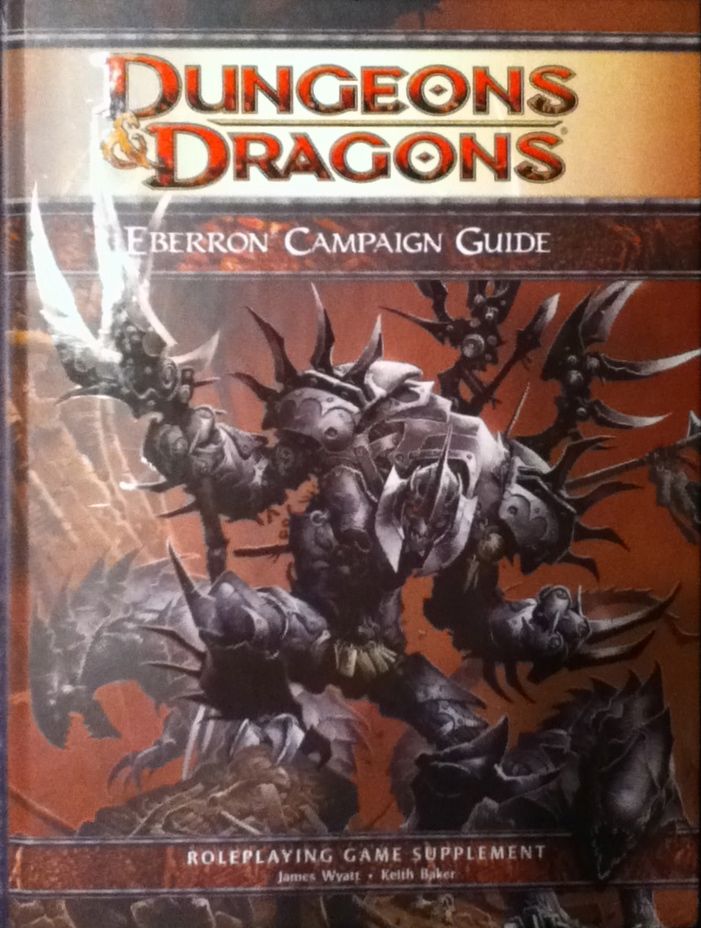
When we played D&D,  we only had the core material in the three core D&D 4 books - and this was the best time we had with the game. Every book we added we felt was excellent, but the power creep and changes just wrecked the game for us in the long run.

We hated the "level 10, leave for the planes" multiverse setup in D&D 4 and after. It marginalized every campaign world and made the tired "go anywhere, do anything" multiverse play the norm. To us, having a world scale from 1-30 was really cool, and it meant out there on this world, there were level 30 raid bosses lying in wait for those foolish enough to get near.

So for us, having the first three books and no "planar ejection seat" for high-level adventuring is when the game sang to us. It was cool. Paizo did a world like this with Golarion. They created this almost "sealed up" sandbox where all your fun, even the high-level stuff, was in one game world.

This was an epic place where epic creatures chose to live, and epic powers made their homes. There was a level 26 dragon in the mountains, with a dragon cult trying to become a considerable force in the world. Level 14 orc war bosses were serving as the leaders of temples of Orcus. The world felt like it had built-in challenges and a sense of scale.


No World Needed

We had the basic map and created the rest of the world ourselves. There were these "monster creation rules" in the DMG, which we used to develop foes, and we skipped many of the D&D standards. Need a level 5 brute and controller? Fine, just do some math and give them a few level 5 powers from a similar class, and you are done.

The D&D product identity monsters mainly were sidelined. We kept goblins as the lower-level humanoid monsters, while orcs exclusively started at level 5 - and they felt severe when they showed up, which we loved. We had this thing where orcs were never let out into the world until they trained until level 5, and most were followers of Orcus, so they were "bad dudes" whenever you saw them.

We let monsters take character class levels, leading to wild encounters. You never really knew if the encounter would go sideways when the monsters started pulling some of the same tricks the characters had, and the battles felt epic and unique.

It was a great place, full of adventure and nobody knew what was around the next corner.


More Books = Less Fun

The more books we collected, the less fun we had. The more official rulings told us we were playing the game wrong. The monster rebalances made us rely less on our imagination and more on the books. The new classes started repeating each other, shuffling powers or were so OP they became the hot thing and ruined the game for the original classes and characters.

We used the few bits of world info they provided and ignored the Greyhawk module transplants. The best stuff was the new and original content they produced for the D&D 4 world and that which captured our imagination.

And the constant focus on the planes lessened the fantastic world we had set up. Once you got to level 10, any one of the official campaign worlds felt like an MMO "starting player zone," and you left them to go flying around the multiverse. And it sucked. The incredible world we built felt like an aberration rather than an everyday thing.

Also, we saw the creep back towards the previous edition norms taking over. Orcs were a 1 HD creature, just like in AD&D! Please make things how they were! Run back into the cave allegory! We felt a little let down when we saw Essentials rolling things back to the older ways.


Our Way of Playing = More Fun

When I look back at this time, what was the most fun?

  • It wasn't the world; since we ended up making that up.
  • It wasn't product identity; we ignored it.
  • It wasn't the adventures; we made our own.
  • It wasn't the monsters; we made most of them ourselves.
  • It wasn't the support for the game; too much support killed the game.

Was it the D&D 4 game? The rules were fun because they were new, and the new races were fun, but I am sure we could have fun with any sort of rules this way. The powers and leveling were okay, which had many problems where we felt characters got weaker as they leveled.

The unknown was very fun, using that monster creation system to come up with all sorts of new monsters "never seen before in D&D!" The more monster manuals we bought, the less fun we had fighting monsters. The more class books we purchased, the less joy we had playing classes. The more world books we bought, the less we enjoyed exploring.

It felt almost as if our imagination was better than the game we were playing. The more tools the game gave us to express our ideas, the better things were. The more the game tried to fill things in, the less fun we had.

I suppose all of that should be obvious.

Thursday, July 7, 2022

Is Modern Fantasy too Cartoony?

I love different ancestries and character types, and these have always been a part of my game. The above is from the Pathfinder 2e Advanced Players Guide, and they are some very cool options for characters.

But I noticed this trend in almost every fantasy game these days.

Everything is turning into a cartoon.

What I find troubling about this is not the options it gives us, but often I find players will use these as a reason to not develop a background and go with an animal stereotype "as" their character. If you did this with any human race, it would be deeply troubling, but with animals, players will adopt the stereotype and lean into it as if it were their entire archetype.

I am a mouse person. Therefore, I go crazy when I see cheese!

I am a catkin, so I lick my paws and groom myself! Catnip makes me go wild! I purr and growl!

I am a crow or raven person, so I caw-caw when there is trouble!

I am a wolf person. Therefore, I walk around with my tongue out, pant, and howl at the moon!

And I sit at the table and want to scream. Would you not do that! You are just replacing problematic human stereotypes with "ha-ha" animal ones, and if these races were actually in the world - they would likely find that just as offensive as well. I bet if we played a game with humans only, you would complain about having to create a backstory and character concept and call the game boring.

I like having them in my game; it just bothers me when players get lazy and use typical animal stereotypes as their character. No backstory, personality, who am I, drama, family, or connection to the world - just an animal stereotype sits at the table.

Is it fun to roleplay and act like an animal? I guess so, but I get a table full of players doing this, and I feel like I am in a cartoon.


Good Players Make the Difference

Now, to be fair, there are some excellent anthro role-players out there, and I see some great stories and characters based on animal heritages. Those who take the time, love the ancestry, and use that to enhance the story they are telling are great players to have at a table. They also lift others around them who choose animal character types and elevate the game. They also play against stereotypes and use that to enhance their roleplaying.

I suppose modern D&D and Pathfinder exist in a world influenced by anime and manga. Since you see a lot of animal-style characters in that media, it transfers to roleplaying, and people want to see them here too. It is not bad, just something a lot of games do very poorly and often enforce the stereotype "as" ancestry instead of creating a unique world and culture for them.

Quality over quantity.

Do they fit into the world and history, or are they just here?

To respect an ancestry is to give them a place in the story of the world. A home. A history. Culture and tradition. A reason to be here. Importance.


Options

Not that cartoony is not bad - this is purely a choice and style decision. I love anthro RP when it is done right. I do not like it when it is used to bring lazy stereotypes to my table; any more than stereotyping a human or traditional fantasy race would be welcome. Because you are an animal, ancestry does not give you a pass from having a family, building a connection to the world, and having an interesting backstory to share with others.

But there are options.

I don't want to call the non-cartoony options "pushback" because that would be unfair to games and the people who wrote them. Many games make a conscious decision to give a curated set of options for backgrounds and ancestries, which is very cool for groups that like the more Tolkien-style stories or gritty fantasy worlds like Game of Thrones; we have games that provide those choices. Even games are entirely anthro and animal characters, so those options exist too.

Choice in gaming is always good, and I feel those who frame this as pushback against the modern cartoony style are just looking for anger clicks. People have preferences and choices, so supporting those is always the best and most inclusive way.

The Low Fantasy Gaming RPG is an excellent 5E-style of option for a more realistic style of game that keeps the rules people are used to. I prefer the word realism because it perfectly contrasts the cartoony style. I can have a low-fantasy cartoony world with anthro characters, for instance. The realism-to-cartoony line has a lot of points in between and gives you a slider you can adjust to taste.

I can add anthro ancestries to Low Fantasy Gaming, but the game gives me the familiar starting point of the human-elf-dwarf-halfling base with a half-skorn (beastmen) option that can be swapped for orcs. If my group chooses to add one anthro race to this world (like replacing skorn with wolf-kin), it immediately stands out and is unique. Still, I would also require my group to do the homework and explain how it fits in, what the conflicts are, what the society is like, their internal factions and all the fantastic world-building stuff.

But for groups that want to create a more familiar style of world and game, these options are fantastic.

I would likely stop with just a handful of significant, highly detailed special ancestries than a book full of random and flavorless options. I don't want 100 different animal shapes to roleplay with; I want a handful of great and flavorful ones that fit into the world and character stories - even if it is just one.

Sunday, July 3, 2022

Golarion

Golarion is the world I wanted Greyhawk to be.

It is exciting, full of iconic, interesting, different places, and a giant sandbox. Perhaps it is too much of a sandbox and amalgamation of fantasy tropes and cultures - but that is also its charm. It is the ultimate fantasy theme park world Mystara dreamed of many years ago.

Part of me feels the 2e world of Lost Omens lost a little in the translation to the 2e set of rules. It doesn't feel as high fantasy and feels more steampunk, sci-fi, and weird west. It feels much more populated and cosmopolitan. There are airships, guns, androids, walking carts, and steam-tech. It is still a cool place, but I sometimes feel like the world is the fantasy version of Starfinder.

What makes the original version of Golarion so extraordinary and remarkable is the massive amount of adventure paths woven through the lands and history of the world. The sheer amount of epic stories put the few Greyhawk adventures we have - even though they are world-class classics - to shame. There is a literal library of stories and experiences here, enough to repeatedly relive great moments and stories. I love those stories. I wish the AD&D modules were written that way and tied together with narratives and characters we could remember as a good book.

And while there is a high-tech ruin in this world, it is contained in one place and also ignorable. The world as a whole is still a low-tech fantasy setting.

It does make me happy the Savage Worlds fans are getting to see these adventures again for the first time, and I hope that project continues from the first one all the way to the last, with all the great books, bestiaries, spells, classes, expansions, and resources in between.

And I am hopeful I will get used to the 2e Lost Omens world. I just have to find my place in it. My subscriptions are current, and stuff is coming, so I am a supporter. I just don't feel they have what I want yet. My imagination is not here, not yet.

My hesitancy in running a classic Greyhawk campaign comes from the feeling my time is better spent with places currently in development and supported by teams and creators I trust and am a fan of. I had the urge recently to run the original Greyhawk modules using Castles & Crusades rules, and I still may do that for fun.

But the place I dream in and invent new adventures will likely be where a new generation of writers and creators are playing and dreaming.

Or a world of my own.

Tuesday, May 10, 2022

Dungeon Fantasy: The Ultimate Norse Campaign

I liked my Aquilae game because of the entire Norse-themed area I created and the intense survival adventures I had up there. I started this game with Pathfinder 1e, but I stopped when I realized, "Hold on, there is something bigger here." The rest of the world seemed small, and my interest in those areas lessened. Up in the icy north is where I wanted to be.

So I planned to switch to Dungeon Fantasy, then I decided maybe not, then I re-decided that my original feeling to switch to a more visceral and point-based system with detailed blow-by-blow combat was the right one all along. I don't need a few thousand Pathfinder 1e monsters, items, and spells - most of which would not thematically fit into the experience. And I wanted the detailed skills, and the intricate combat builds that a GURPS system could bring to the table.

And then something interesting happened...


Nordlond

With Gaming Ballistic's line of Dungeon Fantasy books, we have a rare gem of a series that covers Norse-based adventuring called Nordlond. There is an adventure series, the excellent Delvers to Grow book, a book of Nordic fantasy races, and a fantastic extraordinary Norse-themed bestiary.

In short, everything I need. I get a mini-campaign sandbox, NPCs, a series of adventures, monsters, and more Norse-themed content that works with Dungeon Fantasy than I could ever dream of having. And I have to convert nothing into the game; it is all ready to use! And I can add my fabulous collection of Dungeon Fantasy PDFs from Warehouse 23 to add to the fun.

The races book is a fun treat and gives me many flavorful modern-ish varieties of fantasy races. This is not a "hardcore" selection of races that limits me to Norse mythology, but more of the traditional fantasy mix of races re-imagined in a Dungeon Fantasy lens. We have wolf-blooded, dragon-folk, halflings, traditional elves, gnomes, dwarves, cat-folk, raven-folk, and a bunch of fun choices that are a little on the cartoony side but very cool, and they feel great to me for a more "expanded" worldview on Norse mythology. I love the choices here, and they will mix well with anything else I can come up with in Dungeon Fantasy.

It gets better, a nearly 200-page traditional fantasy bestiary, in full color, with an excellent B/X assortment of monsters that feel like I always wanted Dungeon Fantasy's missing monster manual. All monsters are Norse-flavored, but the selection here is fantastic and blows me away. I always wanted this, and it has none of the monsters I will skip over. This is truly one of the best Dungeon Fantasy books out there and worth getting even if you do not play Norse-style campaigns since it does the whole monster manual thing right.

It gets even better since we have a book with Norse-themed gods. This is a shorter book, but it hits all the best choices for Norse gods and presents them slightly more generic than having a list of dozens of specifics. I like a smaller selection of gods since it creates clear decisions, and you don't get as many minor-but-similar pantheons competing for attention. And considering you build clerics focused on the gods, the differences are apparent and thematic.

Great stuff; I am all set, right?


I Need a World

Putting Aqialae to the side hurts, but I have a great replacement. If we dip into the world of 5E for a moment, we find the fantastic Svilland Campaign Setting by DRS Publishing. The 5E market is vast, which means books where they spend a lot of money on art and looks, and this book is flat-out unique and beautiful.

It is a sort of a "dark Norse" setting for D&D 5E, but I won't play this with 5E because my heart is set on Dungeon Fantasy and Gaming Ballistic's fantastic work with their line. I won't use the gods or races here either, as my Nordland Folk and their simplified but similar pantheon will make this their home quite nicely. Everything else from the dark feeling, strange cults, battle-scarred lands, excellent locations, city maps, and stunning art for sites and places is all mine. There are adventures, too, I can convert, along with a few sourcebooks that fill out areas of the world.

Now why replace Aquilae? If what I love about the world is just the tiny 20%, why not spend all my time there and focus on that? If I have an incredibly thematic and beautiful setting, this will be a perfect replacement for the one I worked hard on, but there is so much to get excited about here, and the art and maps are fantastic.

Some of the art in this book is Free League level jaw-dropping work.

Svilland Campaign Setting, page 117

This is the best Norse setting for 5E, and I am thrilled to borrow it for my game. If I were playing 5E, this would be my setting it. It is that good. But I get this feeling the gritty and brutal combat of Dungeon Fantasy will feel right at home here, and it may do a better job of telling the story I have in my head for this game. With 5E, the rapid recovery of spells and health would work against how I see the world working - a brutal struggle to manage scarce resources and survive.


Do Nordfolk Break Immersion?

The Nordland Folk do break the feeling just a little by being a bit on the toony side, and the gods from the Hand of Asgard are not as extreme as the ones here. I like that, though, since I want the greater diversity of races and character types to all to have a chance to make this their home. There are no "boar people" or "cat folk" in the Svilland setting, as it tries to take that already toony nature of 5E and dials it way back to an intricate level of immersion and realism.

Raven-folk followers of Tyr? I got to have them. I am sorry, realism and folklore, this is just too much fun. And they are statted for Dungeon Fantasy. Great stuff! Plus, I would rather have toony characters doing awful things to each other than real humans doing the same. The shock value is higher, but also, the connection to the characters feels better than in a primarily human-focused world.

If terrible things happen to my raven-folk character because of mistrust and intolerance, I will feel really bad. That is a good thing since that will be the conflict I fight against. If a dragon attacks a town and the town rounds up the dragon-kin as possible "collaborators" because of a loud-mouth instigator, that is a terrible example of all-too-familiar suspicion and distrust. That is a wrong that screams to be righted.

These are the things heroes fight for.

Are they upsetting and triggering? Yes, but you get to take action, fix the problem, and root out the evil who tried to sew distrust and division.

And you bet I would make that evil secretly influenced by the demons, evil cults, and devils looking to weaken society and drive these divisions between good people and townsfolk.

Dragon-folk and half-demons? Those work, and given a little grit and tarnish, will make great outcast societies and outsider types. Those work, and given a slight grittiness and tarnish. Cat-folk and the other beast races also can see tribes of them wandering the north or taking islands for their own lands. I intend for some cities to be more melting-pots (due to trade) and other places to be a little more suspicious to fit the darker theme. But there will be places they all can come together and interact. I want to keep that sort of dynamic between the cultures that allow a lot of interaction being more vital in trade and culture, while the more isolated and fearful realms have that distrust and suspicion.

Everything fits and is fantastic. This is an epic-level replacement for the theme-park style of the world I built for Aquilae and one I still intend to use, but I have so many A+ pieces for this setting and game they fit in with what I loved about my Nordic survival game, so much.


Conflicts

About 85% of this all fits together nicely with rules and stats. The only part is meshing all of this in the Svilland setting, but once you say "population can be anything" and open your mind to the possibilities, things open up quickly and become very cool. There will be a conflict in this world between "peoples coming together" versus "those who isolate and turn inward," and I will pick a few factions that embody each.

Some of the races will be caught in the middle of these conflicts. Do dragon-kin feel beholden to the chaotic dragons who destroy towns? Some isolationist clans will accuse them of being one and the same and see them as a future threat as a potential draconic army. Like tieflings and devils, some clans will decry them as impure and see them as spreading devil worship. The beast races may be seen as friends of violent humanoid tribes. There will also be mistrust those who use sorcery and magic outside the gods.

I need these divisions reflected in my game since the factions and communities that accept people's differences will ultimately have the best of everyone and be more robust than those who want to divide and isolate. I need to give players something to fight for and the sinister forces of intolerance to fight against.

This won't be a happy world, but the happy world the players dream of will be one they can fight for.


A Strange Brew

This is a bizarre mix, you have a 5E setting that feels like it is pushing back against the norms of the 5E aesthetics by going hardcore Nordic realism with a human-based world, and you then have a Dungeon Fantasy setting that pushes back towards the 5E aesthetics by making things more diverse and exciting with animal-characters and all sorts of fantastic options.

Dungeon Fantasy is my peanut butter, and Svilland is my chocolate.


Saturday, April 16, 2022

Aquilae: Western Realm Gazetteer Atlas, Part 2

I am starting to loosely fill out my world, and this is a pretty cool map. Back when we got the Deities and Demigods book for AD&D, we thought those were the "official" campaign gods and goddesses and you could play with those. You know, Zeus, Hera, Thor, Odin, and all the classics. To us, the gods of mythology were AD&D.

There were a few gods over there in Greyhawk, but these were way cooler since we've seen them in Clash of the Titans and all of our history books. So they made their home in Mystara, the original D&D world, and these were what clerics worshipped.


Play With Our Stuff!

And then the Forgotten Realms came along. No! Play with these! And then 3E came along. Sorry, we got your gods right here in the Player's Handbook! To be fair, they offered these gods in one of the faiths books for 3E, but they were not front-and-center. And then 4E came along. No, all the modules and major conflicts in the world are between our copyrighted IP and gods! Sorry! And then 5E came along and while it is a little better, I feel it is getting harder and harder for D&D to ever be a generic game, and it takes a lot of work to rip out the Magic: The Gathering and all the D&D IP from the game.

There are times I feel D&D went World of Warcraft with its lore and it is not a generic fantasy game anymore. It is a quite specific one with a quite specific world and requirements for everything to be there, much like how Pathfinder 2 feels. If you love that lore, great, but if you want to build your own world, I would rather start with a more generic game without the Wizard's IP.

We found B/X games like Old School Essentials and Labyrinth Lord were easier to play with our original ideas and have them feel right than the latest versions of D&D, which felt like they made a lot of decisions for you and filled in a lot of your campaign world with their copyrighted material. They want to sell you things and I get it, but the reason we got involved with this hobby in the first place was to do our own thing, build our own worlds, explore what-ifs, and be creative.

This is why a lot of the OSR appeals to me, I remember a D&D before the official lore became the game. I know people pull it out and do their own things all the time, but to me, I like games that give you a neutral product-identity free toolbox and let you build from there, and not try to add things you can't use if you ever wanted to write a novel about your adventures in the world because of trademarks and copyright law.


Aquilae

Mind you, this product is just a map. No gods, just names and borders of nations, but they don't tell you what those are, cities and roads and terrain - but no descriptions. A GM map with tons of hidden places with cool names, but none of them are described.

What good is that?

Well, this is where your imagination comes in...

So here is what I did with my Aquilae map. Like a kid who did not know better, I found areas of the map that would be "cool" to have a culture, and I put it there! Does it make any sense? Heck no! But this is what we did as kids. If we had a spot for something cool we had gods or stats for, we put it on the map. It does not make one bit of sense nor it should. This is how kids think.

Does it make any sense England, France, Spain, and the Elves are up against the Egyptians? No! But that is cool! Now, these are NOT the original countries, just cultures and areas of the world LIKE those cultures to give us something to start with. Like England, that place is probably more like Arthurian knights, castles, a king, dukes, and that type of culture. Italy is less Rome and more a Renaissance Italy-influenced culture.

As kids, if we had World of Warcraft in our lives, would we cant cool Orc and Undead areas? Heck yeah! Goblins too they are cool and we should be able to play as them too! Do we have pirate islands? Heck yeah, we have pirate islands! Let's put them next to the Greeks! Who cares! It is cool! Maybe the Spartan-like guys will fight pirates in a 300-like ship battle with lots of slo-mo shots! Ah, cool!

I want to play a troll! Over there in the jungle with the lizardmen, you can play them too. Ah, cool! I want to play a shaman! We could put Aztec dinosaurs down there too! Oh wow! Cool!

I still have a couple cultures I want to add, maybe a demon/tiefling area (leaning towards Drandull, rich trading houses on the islands), maybe a dragon-folk culture, a kingdom of magic (Vylanne likely), and I need a few countries to the south to serve as competitors and foils to the Greeks, Undead, and pirates. I have a few islands to the north to work on as well, but I do not need them to get started. Maybe a cool African-inspired high-magic culture in Cyasinth like Wakanda but with magic. Something will come to mind, and you don't really want to fill in the entire map, to begin with.

Does World of Warcraft or Pathfinder's Golarion make any sense? No, this is how they sort of world-build their theme park worlds too. Lots of "ah cool!" areas, and putting sides that like to fight next to each other. And they "borrow" from cultures just as much as this.

I could do this entire world with Old School Essentials, Labyrinth Lord, Castles & Crusades, or any other set of rules and do just fine. I could do it with D&D 5, with a little bit of work and telling players some things are not options. I would love a D&D 5 "basic rules" book with all the IP pulled out that could be used for more generic settings like this.


Challenges

I tell you one thing, this Egyptian culture area is going to be a huge influence on the rest of the world being at the crossroads of civilization. Their traders and ambassadors will be in every kingdom. Maybe the deserts will be incredibly dangerous areas with armies of the dead wandering around. That is cool, and I am up to the challenge of having this culture and mythology being one of the most important in the world. Maybe put a race of naga on the coast.

The elves too are in a strong position, no "dying elves" here, they have a lot of lands and should be a dominant force. Maybe different types of elves share this homeland in different tribes and areas, and it is possible they all don't get along well. It would be cool to have dark elves under here somewhere and have them involved in the conflicts.

Having a magic kingdom in the center ocean seems right, lots of magic ley lines there, and that would give them a lot of power over trade. And they would be a counter-balance to the orcs.

The orcs and undead are a major one-two punch, and I don't see having a typical "Horde" here, the orcs hate the undead and will be at war with them. Playing as an orc seems like an incredible experience, and having their possible goblin allies across the sea puts that whole central ocean into play. The Spanish-style culture will be on the front lines of the orc wars, but those mountains give them an advantage. I could see mass battles and that border shifting constantly, and the whole area is this ruins-filled hellish battleground.

That kingdom between the undead and pirates needs to be a good guy faction that does not always get along with the Greek culture. Maybe a 1001 Nights sort of sultanate with genies, Rakshasa, and other Indian and Arabian influences would be very cool. If I make the Cyasinth area an African magic-Wakanda, and the Greeks in the middle, and Pirates raiding them all, that would put a lot of culture and conflict in this area, and it would be something completely unlike anything I have seen in fantasy.

Making a giant faction in the mountains near the Renaissance-style Euro factions would be fun, since if I put devil-blooded nobles on the islands of Drandull that would create this tension, do we accept the price for the evil and rich islanders helping us fight the giants?

I have two islands to fill north of the Celt-like Fae culture, which I would like to be like a fae-Ireland, but very independent. It would be fun to put naval-based enemies of the English culture there and have lots of ship-to-ship fighting, Maybe Levopp could be the Scottish-style freedom fighters who despise the king. Bynithe is sort of in the middle, and that could be a Portugal-like culture with a queen and lots of overseas journeys launching from there and "off map" trade.


Established Settings vs. DIY

This setting appeals to me because I can take whatever books I have: AD&D, Palladium FRPG, Castles & Crusades, OSE, Labyrinth Lord, Dungeon Crawl Classics, or any other - and place all the cultures and races down in each spot and give them a home in a sandbox. I could have easily done this with Palladium and made an entirely different set of choices, Wolfen, Ogres, Trolls, Humans, Goblins, and the like all in their homes.

Give me a cool map to put things on, and I will find homes for all my toys.

With a Greyhawk or Forgotten Realms setting, I am doing a lot of homework to get started. I have to skim through the entire book and read almost everything to know where I want to start my game. I need to get an idea of factions and conflicts before I start writing adventures to make sure they fit. I need to check the company's catalog and make sure there aren't any adventure sites in modules to watch for nearby. After all that work, I can still be wrong, and miss things that are important.

And it is a ton of work.

Here? I DIY everything. Let's start up north, add some Viking human tribes, dwarves, gnoll raiders, an ice dragon, and we are great!

Modules? Drop them in anywhere. Tomb of Horrors? Yeah, that is somewhere in the French-like area. Labyrinth Lord's Barrowmaze? Needs a swamp. Anywhere non-desert in the middle of the map, and it would be fun in the Germanic area. The Forbidden Caverns of Archaia mega-dungeon? Spain area likely, badlands, hotter climate, and wastelands. Vault of the Drow? Elven kingdom, mountains. Keep on the Borderlands? England area. The older Goodman Games DCC 3E Modules? Anywhere really, just make them work.

I could do a giant kingdom in the France-Germanic area in the mountains and put the G-series there. Giants as the foils for this area of the world, and things are sort of like Attack on Titan with giant fortress walls and giants assaulting them? Aw, cool! Great ideas keep coming into this world because whenever I come up with a cool one, I have a spot to put it in.

Something like this is in this part of the world, and we will get to it later. Right now, let us pick one place and begin our adventures. Maybe if I don't like something or we come up with a better idea later, we could change things. The world is a rough draft and sketch, and we fill it in, change it, and make it ours as we go.

Friday, March 25, 2022

Adverse to the Verse

While we loved D&D 4 and the battle-chess game, the worst part about the game is the endgame let us down. From level 10 on, the game was about traveling the planes. The great wheel. The D&D cosmology. All the iconic locations like some endgame MMO floating continent raid content.

In short, the D&D Multiverse.

And we got this feeling the base worlds of the games, such as the Forgotten Realms, Grayhawk, Eberron, Dark Sun, and all the others, felt like level 1-9 sandbox MMO starter zones in 4E. It did not feel like there were high-level challenges on these worlds, since the high-level expansion books went all-in on the cosmology. A starting town did not need much more than a surrounding area map. You did not need a world map for any of these places other than something like a "what starting zone do you want to begin in" sort of question before your super amazing planar adventure begins.

That boring old starting town you defended and grew to love? Forget about it! Best for like, a home for your gates and a place to store treasure. It is too low level, the monsters around there push-overs, and the shops have junk, so it's best to move on and hang out in Sigil, Planescape, or somewhere cool like that with easy travel options to different planes.

Mind you, Planescape is cool all by itself for different reasons and it can be its own campaign. But not used as a "high-level area" to diminish equally great settings elsewhere.

And our game died because we got sick of the same-old Multiverse that has been overdone and used as a reason for everything, and every unique campaign setting had to be fit into it as a starting zone. A pale comparison of the Grayhawk of old with its high-level dungeons and the super-deadly world, and one you did not need to leave on your way up to the most potent levels in the AD&D 1e.

You could drop a high-level dungeon on the world a few times, but it didn't feel right. The book had this assumed progression path, and it mirrored your typical MMO. Get to the Elemental plane of Fire and start doing Tomb of Horror raids, which will get your gear score up so you can do Temple of Elemental Evil. Part of this was D&D 4E's strong MMO feeling, which felt great at the start but devolved into the grind and numbers game later.

When the 4E expansions detailing the places came out, our game started to crater. We had a cool world with high-level areas and challenges developing, but the Wizards 4E cosmology model took over and we did not even see this coming.

In the old days? Planar travel was strange and weird and something you did not really want to do. You had the ethereal plan and silvered cords and the chance of getting lost forever. Today, planar travel feels like air travel, you go to the airport, get on a plane, and it is nothing special. This feels like the case even in D&D 5e, sometimes more so with the anything-goes Magic: The Gathering science-fantasy content in there, and it does not appeal to me.

And the Multiverse is the generic setting content that will sell regardless of whatever setting you begin in, and the publisher doesn't have to split the market by supporting one campaign setting over another.


Verse: Not Really a Place...

And these days, it feels like the Multiverse is getting marketed harder and harder as the default setting, like some tech-company wannabe wagon-hitching to Facebook's Metaverse. Writers, being writers, tend to chase buzzwords and get hired by Netflix, comics, or other big-money outfits and they tend to follow trends and please their employers. "Verse" is also an NFT-style buzzword and increases the parent company's stock valuation.

A Verse is a nebulous thing you can hang existing IP onto while having infinite room for new ideas as me-too-isms, and you are hoping to elevate your new IP alongside the old IP by linking them through the Verse and selling them as paid-for optional expansions.

It isn't really a real place at all.

And most importantly, it is a vehicle to sell you new things.

A Verse is actually a marketplace.


Our Pathfinder World

We had a cool Pathfinder 1e world and the first thing we did was cut it off from the Multiverse. Getting there or going there was impossible. Leaving it was impossible. We did not do planar adventures. You could not gate out and leave.

All the monsters and NPCs lived there and nowhere else. The highest level creatures roamed the land. The place was packed and cool. The highest-level dungeons were on this world, out there, waiting for you to find them. You had no reason to leave because the gods forbid it, and face it, your entire experience of leveling to maximum level was on this world and waiting for you to grab that brass ring.

There was no Verse.

When I start Pathfinder 2 I am doing the same exact thing. One world, one sandbox, no way out, nor do you need a reason to leave.

And this world remained compelling and interesting all the way up until the end, even after our D&D 4E game died out. I can honestly say there really was no D&D 4E world of ours since it became that nebulous "Verse" creation that we never really could wrap our heads around, it was this vague cloud of ideas and places, and it never really became something real to us. The starting area was the best, and the rest of the 4E cosmology was junk that was easily forgotten.

I feel it is the same thing with Grayhawk and the Forgotten Realms to me these days; those are what I remember. Those are what is real. Those are the things I love.


Tentpole Settings

I recently got my hands on a POD reprint of one of our favorite campaign settings of all time, the original AD&D version of the Forgotten Realms Campaign Set. This was before the novels and GMNPCs ruined the world, and again, this was a world we purposefully cut off from the Verse, much like we did Pathfinder's Golarion later.

And we loved this world, and it was one of the best campaigns we ever ran.

I had the feeling I wanted to use For Gold & Glory, and then later Castles & Crusades to replay this original campaign setting, and again cut it off from the Verse to let it shine on its own. I would love to experience this place again like we did.

And a great setting does not need a Verse at all.

A weak setting does, and worse, a Verse encourages one-shot settings and acts as a collection for them. Then they supposedly sell you the idea that dozens of weak settings are somehow better than a single great one. A Verse ultimately ends up in choice paralysis and a collection of settings you never really want to go back to, remember or care about.

This is what happened to our 4E game. No place we really visited in the Verse we ever really wanted to stay in, and a new more exciting place always popped up to replace the old one, and we threw out the last place we visited on the Verse like day-old junk food. It felt like an exercise in hoarding for one-shot campaign settings.

And the only thing we felt gave any of those throwaway places any legitimacy was the original campaign worlds all that stuff was linked to, like the Forgotten Realms. And what happens is the tentpole setting withers and an endless procession of throwaway one-shot settings entertains players like a low-attention span diet of junk food.

Our tentpole campaigns did suffer when linked to the Verse. Not much happened there. The big evil people were out in the Verse somewhere, gating and teleporting in like some sci-fi enemy every once and a while. The great world that once held a thousand stories was sidelined, the nostalgia place they fought to protect, and ultimately unimportant.


My Fault?

Do I suck as a DM none of this worked out for us? Maybe. My players agreed with me though. The less Verse we had in our game worlds, the more they wanted to return to them. The worlds we cut off and isolated flourished, and we came back to those for years. The worlds on the Verse felt like a strip mall on a freeway interchange, with an ever-changing roster of chain stores that came and went. The more they became like every other well-visited place in the Verse, the less interesting they got.

Even the Verse-based enemies tended to feel like GMNPCs. They had a universe of infinite options to cause trouble in, but they somehow chose the places the players cared about to threaten and attack. It got to be like a Saturday morning cartoon where the villain gates his forces in, a battle happens, and the bad guy flees through a gate to fight another day.

And the sad part is these bad guys had infinite lands and places they could have been spending their time in, but no, they just had to go after the players again. Seriously, why are you threatening this one world when you have infinite elemental planes to be evil in? And infinite parallel worlds? And infinite fantasy worlds on the prime material plane?

With our one-world model, there was one infernal hellish place. They want to cause trouble, they come up to the surface. They can't leave either so we got this deathmatch fight between demons and the heroes, and the demons could take a part of the surface world - and it meant something. With very tight limits on realities and the world, the conflicts and fun multiplied.

I don't like infinite X versus infinite Y in infinite Z places stories. Maybe I don't run Multiverse games right. Maybe they are just not my thing.

I have problems with them, and in my style of play is a more grounded affair with places with history and meaning and other areas of great danger and peril. I like building a world, starting in a small place, and expanding outwards. And I like the world we play in to feel important and the center of our universe.

You take that away with an infinite Verse, and all of a sudden the world we loved feels very unimportant and small.

Saturday, January 22, 2022

Lamentations, the 17th Century, and Fantasy Worldbuilding

Shout out to RaRa-Rasputin and his Youtube channel. Go subscribe and support his work. He had a great interview with James Raggi, the author of Lamentations of the Flame Princess, has this wonderful discussion about why he set his game in the 17th Century. Around the 15-minute mark we get this:

When people play medieval fantasy, they are not playing like medieval. There's so many modern assumptions still in there, and the 17th Century is when those things are starting to exist, so they make sense as far as how people play anyway.

This is a fascinating quote, and there are many in here, and one about Middle Ages settings that make me feel that a true Middle Age game is so far away from our "modern" experience that it would almost seem like playing in a sci-fi setting than anything we associate with traditional "medieval fantasy" as we know it in tabletop gaming.

You take the concept of serfs and peasants, and how they belonged to the land, could not leave or move to a new town, and were more considered property of the local lord. That isn't anything we know in traditional fantasy gaming, it is borderline controversial to even mention these days, and framed as science-fiction we are more ready to accept this as a concept. Seriously, if you did a big-budget sci-fi movie where evil Earth corporations enslaved an alien race and used them for labor, that would be something you could mentally frame and accept easier than accepting the fact we used to do this to each other on this planet.

This one statement sends me down the rabbit hole of reading history. An ACKS game, played right in a true Middle Ages setting, is not at all like a Lamentations game in the 17th Century. ACKS would feel like playing sci-fi, and I dare say the farther back you go, the more sci-fi things become.

The modern experience is a very small window in time. It is the one we are the most familiar with, and it is the framing we use to look at other people and other times with.


Modern Fantasy

When you consider the "modern fantasy" generic world, and this world is this almost "all ages sort of generic Tolkien meets MMO" world. It is built off safe fantasy art, sterilized by corporate sensitivity reviewers, double checked so it won't anger Twitter or the stockholders, and it becomes this self-sustaining force that permeates every fantasy game.

Generic fantasy has become this manner of speaking, dress, world building, and a look and style that I feel is  decidedly like a "modern world dress up" with some fantasy architecture thrown in there. Harry Potter is the great example of modern-relatable characters, very modern in outlook and manners, living in a fantasy world. All of the TV tropes in Xena and Hercules, those direct-to-video fantasy movies, animation, and those sort of modern people in fancy dress living in a world with fantasy replacements for modern conveniences.

I feel this world mixed with a set of rules even enforces a manner of acting, such as someone who behaves like they are playing a set of rules instead of playing a character in a real world. The world takes on this manner of acting, and people in the world act like they are playing one version of a fantasy game instead of acting like real people in a realistic world.

D&D 4th Edition felt like it had this problem in an acute manner. It did not feel like a real world, at least not to us, it felt like the world of a video game MMO following a specific set of rules. There was this layer of the artificial put on top of everything, how people in the world behaved, the governments, wars, conflicts, exploration, rural life, city life, and every other facet of that reality. The fact the planes are integrated into the world and a part of normal life. The gods are real and "end bosses" for the world.


My Fantasy, My Perspective

With the current edition of D&D we have a huge Magic the Gathering influence, and this high-technology magic feeling where magic can do anything for zero cost. For fans, it is great to see those worlds come alive. But it does bring in a culture, sort of nebulous reality that can be anything to anyone, and it changes the fantasy reality to a "be anything and do anything" sort of world with multiple dimensions, modern influences, and a lot of - I don't want to say baggage - but assumptions that can mean anything to anyone is the better word. It does feel more nebulous and that "the world exists from my perspective" is a modern thing and also a powerful force of marketing the game.

I feel modern fantasy is evolving from the "generic MMO fantasy setting" to more of the world is "your perception of fantasy, and every perception is valid" sort of experience. There is also this feeling of empowerment delivered with the game, almost like a Power Rangers sort of thing, but tailored for a mass audience. Because I play a powerful wizard in game I somehow have more power in the real world sort of sales pitch.

They blur fantasy with reality, which in previous editions of the game was a no-no because of the effect it had on some people's perception of reality.

Also, the zero-cost magic thing is also troubling to me, as our current world is dealing with resource shortages, pollution, worker suffrage, and great imbalances of trade from this "infinite consumerism" mentality. Infinite magic is the Amazon.com one-click anything goes mentality, and I can see why big companies don't want you questioning it. More on this later, but infinite magic I feel enables the "my reality, my fantasy" experience these companies are shipping today.


Fantasy Conveniences

I need my cell phone. I need my mass transit. I need my freedom of speech, freedom of association, and other human rights. I need my airline travel. I need my Internet. I need my speedy travel. I need my public education, schools, and universities. I need my on-call law enforcement with detectives and judicial resolution. I need my familiar governmental authorities and government programs. I need my modern outlook and assumptions. I don't want people of different heritages fighting or coming into conflict. The world must be cosmopolitan with dragon-folk, demon-bloods, and other fantastic races walking around without any differences, bad blood, mistreatment, or suspicion.

Very few of these things are in the historical record. They get Harry Pottered into a lot of these settings. The farther you go back, the more alien the world becomes in all of these regards.

The modernization of modern fantasy RPGs is this commercial force in making a product more acceptable to a mass audience. Some call it a Disney-ification of rules systems once they go mainstream, and you see that in some of the newer movie and series reboots as well.

I feel when companies add these fantasy conveniences where they create "magic parallel technology" for what are things we are used to in the modern world, something is lost. We aren't immersing ourselves in a unique world or time anymore. We don't have to be curious and figure things out. We don't have to learn the lands, peoples, and cultures. We have our traditional Western and current-day assumptions and biases preloaded into the setting and everything feels comfortable. The setting is pre-colonized with our biases and we don't need to learn to adjust to a different time and place.

We are still stuck in the modern world, the one just around us in our daily life, and never escaping it.


The OSR = Room to Explore

I feel this is why I am gravitating more towards the OSR. There is room for experiences outside of that generic fantasy core that has been overdone and I feel become a stereotype of the Western and Internet-centric experience.

How can we ever learn to understand and respect other cultures if we are constantly transposing our own reality onto everything we experience?

The OSR has a lot of room to explore, grow, and find niches that spur me to read history and understand a time outside my own. Also, to understand things from a non-Western perspective. ACKS got me deeply enthralled with the Middle Ages experience of faith, lordship, the pitiful worker experience, and the entire forging kingdoms through blood and conquest. Are there bad-controversial things in the game by today's standards such as forced-servitude? Yes. But as a player, I am free to fight them and correct that wrong, if I choose. The game doesn't erase things it doesn't want me to see.

Lamentations of the Flame Princess got me deeply into horror fiction and also the parallel horror of colonialism. Are there bad-controversial things this game? Yes, it is a horror game. But we need the terrible in here so we can confront our own fears and feelings about how Western society (and to be honest, a lot of non-Western societies) was built off the backs and blood of others. The game does not hide that truth that is integral to the horror experience.

ACKS and Lamentations have me buying and reading history. My real-world life and experience are growing, and I am educating myself as a life-long learner. Modern fantasy feels like a frozen TV dinner in comparison. It doesn't nourish me mentally, challenge me to rethink what I am told on the Internet, and give me that depth of knowledge that makes me an interesting person.

Lion & Dragon can also be mentioned here, but I am still reading that game and it looks like a fun one.

Are there less-heavy options in the OSR? We got Old School Essentials, Labyrinth Lord, Basic Fantasy, and Castles & Crusades that can fill the need. They can easily do "modern fantasy" if that is your thing, or they can do a lot of other things. The games aren't really written to enforce one world or style of play. If I want a game that doesn't challenge assumptions and delivers the modern feeling, they are all here.

We have Dungeon Crawl Classics out here too for a more Heavy Metal fantasy experience of gonzo anything goes play. And there are many others, from a Conan-style game to sci-fi, hexcrawls, gangsters, and many other options.

But most importantly, I have that choice, and I can play these grim and gritty and with any assumption I want. And I am not having modernity forced on my game because the rules include it as a requirement to make the game comfortable to a mainstream audience.

Also, the room I am finding to explore in the OSR is not only in the games I have to read and enjoy, but the room inside myself I have to grow as a person in my experience and knowledge.

Tuesday, September 28, 2021

Leaving Azeroth: Project Overview

There was a time when my brother and I would roleplay in Azeroth, the World of Warcraft world. Those were fun games, and the lore and story constantly changed and was a great living campaign with many twists and turns, and lots of memorable characters.

And then, times change.

Azeroth and World of Warcraft no longer feels compelling. The weight of misbehavior in their parent company and the cash-grab nature of the game makes the world no longer feel compelling. I loved to lore and those who live in this world, but get the feeling it is time to move on.

So, what now? Go back to my traditional fantasy tropes and forget such a place ever existed?

Or do what all great writers do, borrow and become inspired?

As D&D halflings are to Tolkien's hobbits, there is a way forward while honoring the feel and heritage of these fantasy races in a setting neutral way. Perhaps, like the beforementioned halflings, there are "sister races" out there in the cosmos enough alike in the mirror of reality, but not tied to Azeroth in any shape, way, or form. Like humans in another sci-fi or fantasy world that are not from Earth, there could be some out there enough alike the version presented in the game I used to love that I can somehow take the good memories with me and leave the bad ones behind.

So how do we do this?

Simple enough, I hold up a mirror and start imagining what could be.


The Moon Elves

What feels like the most wasted potential in story and consequence on that one world could be just one version of the infinite tribes of Elves of the Moon. Now, Moon Elves were once seen in the Faerun setting, but nothing like their counterparts seen elsewhere. Blue hued with colorful hair, tall, graceful, with eyes which glow of moonlight, this race of elves could inhabit the deepest and darkest forests where they climb the highest trees at night to celebrate the Elven Gods of the Moon - and there may be one, or many, who knows?

If I did these in Mystara I would not challenge the existing Elves, but sprout a giant tree and forest on an Island, like Safari Island in Irendi, and let them rule it and have tribes all over the island kingdoms.


The Sun Elves

Graceful counterparts who worship the Elven Sun Goddess, we could find the Moon Elves sister race living in places of the sun, deserts and bright, cheery forests where the sun shines and they follow the dictates of the light from above. I would change their eyes to glow with sunlight instead of arcane energy to help them match their Moon Elf kin, but leave them the seekers of pleasure, civilization, and fine arts - much like a high elf in normal D&D style lore. If it were me, I would put them in the desert and make them a magically advanced society of art and culture, allowing them to worship the sun all day and build trading routes across vast seas of sand.

If I were doing these in the Mystara setting I would drop them in that desert area, perhaps on a coastal oasis island, and let them gradually expand inland.


The Taurus

Why not have a minotaur race named after the astrological sign? This is an easy one, and most of the native lore could be used, or you could go in a different direction with them that does not borrow so much from Native American tradition. Like their namesake astrological beast, the minotaur race could fit in a Greek style civilization with a maze motif, to a more high-plains tribe of nomads with camp cities as they move about the land, never really settling down but following the migrations of the beasts they hunt and live from the land with - never exploiting but always keeping the sacred balance of nature to ever sustain them.

If I did these in Mystara I am sure the far north would have the space for them to roam and follow the Great Hunt.


The Trolls

One could continue the voodoo and witchcraft culture of the Azerothian trolls, but I would drop the Jamaican accents and Aztec motifs. I feel you could do so much more with them once you cut those stereotypes free. Give them an allied race of frog people and lizardmen near the jungles and swamps they love. You could make their temples more reptilian with giant snake heads, log forts, and temples filled with jungle gold. I would make them more a sort of interesting lost civilization with great jungle cities and temples that the hangers-on to an Orc alliance they feel to be in other worlds.

Yes, break up the homogeneous Horde and give each  civilization its own place to shine. In Mystara there is a huge swamp that would suite them fine.


The Orcs

They looked like Warhammer Orcs but are far more Shakespearean and militaristic. D&D's orcs always bugged me with that one hit die and never felt as epic as the Azerothian or even Warhammer variety of Orc. This one feels tougher since there are a heck of lot of built-in bias against Orcs in D&D settings. They are one thing and supposed to be that one hit die level one encounter list filler before we move on to bugbears and zombies.

I could do these as an evolutionary turn for the orcs, have them wipe out and send older tribes on the run, and these new civilized, magic-using, organized military and brutally diplomatic breed grew out of some pact with darker forces granting them great intelligence, cunning, strong tribal bonds, and ability to use magic. If I were doing these in the Mystara setting I would drop them in Thar and put them at war with the other tribes, only to eventually take it all over.


Humans and Dwarves

Humans and Dwarves are easy. Just make them however you want and put them anywhere. Mystara has plenty of theme park human and dwarf areas, take your pick and go. Just make them stocky and give them that Azeroth look and manner, and you are set.


Goblins and Gnomes

The goblins and gnomes, I would like these types of races honestly in a Steampunk setting so I may save them for that. If you did a lot of flying ships in the setting, let them have those and ally them with other flying races above the clouds. Maybe their home city is a huge floating island you can never really say where it is. This feels the easiest way to integrate them and get those fun flying ships that are sort of Spelljammerish into the setting while giving the crafty goblins and gnomes a home that is unique. Properly framed as sky-bound civilizations, they work a lot better and are easier to integrate.


The Undead

I never liked playing a zombie corpse, but I do see the fun in playing vampyrs and semi-undead. You could make a "dead area" somewhere in the world and open up cool vampire-like races that were sophisticated and cool. I could see even adding ghost-people as a race option, and open up the spirits for play. On their own with some cool idea work, like an alliance between vampires, ghosts, Spirit Elves, and Frankenstien like reanimated you could have something cool that is not a Horde vassal.

Spirit Elves? Now they sound cool and could give you that banshee-like option as a character race within the Undead alliance. Perhaps they make their home on forests that are between the realm of the living and the dead, and they could be moody, brooding, and ultra-cool to play as PCs.


Others

There are more races than that in the game, but this hits most of the majors and gives me a good start to keep the feeling and meaning these races had in that world, but get them the heck out of it and off on their own stories and paths through a fictional world I create. I could have all sorts of fun with a werewolf race, feline races, and some of the other standards roaming around here and there. Just give them a proper home, give them allies that support their central concept, and let them flourish and bloom on their own without sticking them on one side or the other.

Perhaps Orcs and Moon Elves could find a place in the world the cooperate against demons? The stories should be your guide, not a game that honestly you may wish to leave behind - and take the best parts from for inspiration.