Showing posts with label Star Frontiers. Show all posts

Sunday, March 31, 2024

Visceral Action


So I was playtesting my Amazing Adventures-powered version of a Star Frontiers-like game last night, and I discovered a few things. I call it a "-like" game now since I am diverging away from many of the broken things in the Star Frontiers system. It is becoming more of my own science-fiction game that stands on its own.

Our Star Frontiers campaign was set in that universe back then, but it diverged widely from the old canon. Our game had elements from Space Opera and Traveller, with Space Opera being the most significant influence. In the OSR, there is this mythical, almost romanticized "the way we used to play it" thing with fantasy.

We had that thing going on, but for sci-fi. We played a 30-year campaign set in a generic sci-fi universe with only a loose tie to the Star Frontiers universe, with most of the universe being ours. Star Frontiers only existed as the glue; it could have been any universe. We had a lot of space races, fully fleshed out like Saurian races, Canines, Felines, and others in our universe with home worlds and politics that created conflict and intrigue. We had more enemies than just the Sathar.

I was working on my reinterpretation of early 80s sci-fi role-playing last night, using the SIEGE Engine and AA as my base system. Then I realized how horrible Star Frontiers' personal defenses and armor were. You had to pick an attack type and defend against that with a suit, and then stack a field with a powerpack on top of that to protect against the other type of attack. Then, it was a battle of attrition as you and your enemies wore down defenses to get at the meaty insides. And you could set lasers to burn an entire power clip, so you could just alpha attack with 20d10 with a laser pistol.

We never played it that way. We assumed defenses would be good against all types of attacks and used an armor system that protects against all kinds of damage. This was when I realized diverging from my source material would give me a game that was better than a straight conversion and better fit our "way we used to play it" feeling back in the day.

So, goodbye, Star Frontiers, and the d100 system. And hello to early 1980s sci-fi role-playing, like the OSFR or Old Sci-Fi Renaissance. This has to be d20 and based on a B/X scale since maximum compatibility is a design goal. It also answers, "What if TSR kept d20 as a house system?"

Amazing Adventures is a base since it covers modern games and gunplay. It gives me the SIEGE Engine as an all-in-one, best-in-the-OSR resolution system that stays out of the way and gives me all the rules I need without all the heavy rules scaffolding to drag around like a B/X or homebrew system, and without the rules weight of a system like GURPS.

So I was balancing armor versus weapon attacks last night and shifting more towards the system presented in Star Siege, where you get an AC bonus for armor plus a DR value that reduces damage. And I got rid of the "protects against X but not Y" plague of the guessing game in sci-fi roleplaying where designers get too pedantic and create defenses for one class of weapons but not another - and this is a plague on sci-fi games. Designers get stupid and think like 21st-century people, when if I were in the future, I would say, yeah, give me some laser protection in my ballistic bodysuit, please.

The people who live in a universe like this would create armor that protected against many attacks, probably not the best of each, but enough to be useful against energy and projectile weapons. This is like people in the Renaissance trying to design a modern combat system and making armor that protected against pistols but not rifles because, you know, they were different! And let's make the shotgun vest that only protects against that type of attack.

My new OSFR system has become much cleaner, and the combat is faster. Equipping characters became as easy as a B/X game. Why wear light armor? Well, my undercover space cops need to look like they are dressing normally so they take the best civilian protection they can get without looking suspicious. If they need heavier, they can break out the tactical vests in the trunk of their hovercar. Otherwise, you fight with what you got and hope your DEX modifier to AC makes a difference - and take cover when you can!

Since I am also binge-watching Miami Vice, the idea of star cops fighting evil alien infiltrators and their plans to overthrow society from within appeals to me, especially with that 1980s influence. My star cops will mostly have civilian protection and smaller handguns and go undercover to bust the subversive alien bad guys and their nefarious plots.

But what I came away with during my gunfight testing was a sense of visceral action in an OSR game that I did not know it had or I assumed it didn't. AA has a critical hit and recoil system that reminds me of the original Top Secret game. For every shot (with specific weapons), you accumulate a recoil penalty that adds to your target's AC. I had a thug with a handgun (like your typical 9mm, ROF 3, recoil 3) fighting a space cop with a laser pistol (ROF 2, no recoil). Now, that recoil penalty rolls over to the next turn unless you spend a turn pausing fire and resetting your aim. The rules say cumulative penalty, but I rule it rolls over like the original Top Secret game.

Critical hits in AA explode, which means you get an extra exploding d6 die of damage to every critical hit, and every critical hit automatically hits—regardless of armor. So I had the thug blasting away at my star cop, and both sides to cover, which meant their ACs were up in the 16 to 18 range, and the thug's recoil meant he was spraying shots and hoping for crits. Sometimes, he would reset his recoil or take his chances and aim - firing at the end of the turn at a +2. He did get hits in, and both of them were wearing light protective civilian armor, so his d10 damage would put some hurt in on my agent. Considering my agent had 10 hp, and the thug was 6, the agent won most of the time.

But there was a moment there. One turn, my agent rolled a crit, blowing the thug away with a 15-damage shot. I rolled a hit location on one of my hit location dice and got a right arm. B/X and OSR rules typically don't have hit locations or critical effect charts (Rolemaster being the best known). So I was sitting there with an overwhelming result of overkill damage. What do I do with that?

This is where the OSR shines.

The referee decides what happens - not a chart, hit location result, or detailed set of rules for overkill. You don't need any of it. Your mind is much more imaginative than any "overly detailed set of rules" could ever provide you.

Just trust it.

Make up what happens.

Even a hit that takes away a few hit points could force a save to drop a weapon or knock someone from cover. A lot can happen in combat, and a game master's ability to "make -ish up" when damage occurs is the art of being a great game master. Hit point damage is not just hit point damage. A near miss can spray bits of concrete in your face, forcing you to deal with a turn of blindness. A non-lethal hit to the leg could knock you off balance. Hit point damage "opens the door" to many referee-inspired rulings.

This is the art of game mastering.

If you refuse to embrace it and just be like a DVD player for your group, you suck as a game master, you are not playing the game, and the players don't need you - they could handle all this themselves. They frankly don't need you. This is sort of the feeling that 5E pushes the "DM as a DVD player," and it sucks the life out of the game.

5E denies the role of the game master and forces him "not" to play. A 5E DM is the referee in a Magic The Gathering tournament, making rulings on cards and situations with the official rulebook. They do not get to play. And it sucks. The most significant difference between the OSR and 5E is the role of the referee during play, and this situation with my test combats perfectly highlights it.

The thug's arm was vaporized, flew apart into many chunks of flaming meat and bone, and was set on fire. He ran screaming into the street behind the planter he was behind and collapsed. A game like GURPS or Rolemaster does not have that result for an overkill damage roll, but I made it up.

And the ruling stands.

That is what happened.

I am the referee, and this is how I get to play, too.

He took 15 points of damage and only had 6 hit points. And I know in AA, death immediately happens at -10, and he was technically at -9 - so he could be alive for one turn until the fire damage gets him. It is a minor point that a quick-thinking player could take advantage of. They could save him if they put him out and stabilize him. If he recovers, he will have a cyber arm and scars all over his body, but that is the breaks of fighting star cops armed with laser pistols.

Like in Miami Vice, he may show up in a later season looking for revenge, with those cool scars, cyber arm, and a dozen levels under his belt as he worked hard to become the campaign's next major villain hiding in the shadows.

As a referee, I get to do that too.

That doesn't happen in 5E, GURPS, Rolemaster, or many other games. You are either constrained by the referee's role or by the overly detailed rules that limit your imagination.

And this certainly doesn't happen in Star Frontiers, Traveller, or Space Opera unless the referee has this old-school mindset. Today's players are too limited by the rules, and they can "see" what I am describing. They play classic games like they would play 5E and wonder what the big deal is. The referee, being trained in 5E, shrugs and says at least 5E has more rules to adjudicate. The entire point of the game is missed because the training and art of playing the game are entirely wrong.

These moments only happen in an OSR game.

With an OSR mindset.

And it happens because the referee is allowed to play.

Saturday, September 9, 2023

The 5E Thing

I wanted to use Esper Genesis for a Star Frontiers ' 200 years after' style campaign, but it fell apart. This is a great game, with many compelling character powers and classes, along with one of the best "Mass Effect" vibes - with no magic - that I have ever gotten from a sci-fi game.

But it isn't Star Frontiers.

These days, the excellent Frontier Space is my Star Frontiers. Nothing is close, nor does anything work as well as this. The original Star Frontiers rules work but show their age in many ways. With FS, the action economy is fantastic, the support for many sci-fi standards is right there, and the rules give me easy character creation and options for improving characters that beat the original game. Scores above 100% in FS do not break the game; the game is designed for higher-level play from the start.

But the fascinating thing to look at here is why EG failed for this setting. EG is a Mass Effect-feeling version of 5E, a stand-alone system with fantastic classes and non-magic powers. It should be an excellent choice.

And then I realized that, at times, the secret sauce design of 5E can suck. The entire 5E design theory is to keep granting powers and abilities at every level. 5E is heavily influenced by mobile game design, and constant reinforcement and power grade make you want to play "one more level."

But 5E has a dirty underside with the design. Because the notion of power is centralized within the character, external items and wealth are deemphasized. The game reinforces a very inward-looking design, where "my character is my god" sort of feeling. You gather so many abilities and powers it gets to be like a bad MMO, where you fill up 100 action buttons (and still need more), and how you "play" the game involves rotations of what buttons you press, in what order, and on what timing.

5E is a very "me" focused game. Wealth and magic items are relatively unimportant. The world around you is less important. The story is less important. The NPCs in the world are unimportant. The god you serve is the exponential power curve, and the power is mostly inside you.

With Star Frontiers and Frontier Space, character power is relatively linear. What is important in a sci-fi game like this? Having credits to buy a starship and maintain it. Establishing contacts, finding missions, and building a story. Relationships with NPCs are essential. Story arcs are important. Character power happens naturally, but it is not a driving force.

Your adventure motivation is for the story and not to gain power.

The sources of power in traditional games are often outside the character - wealth, relationships, accomplishments, treasures, and a few other things. Very few character types are built on that 'internal power' design philosophy - wizards, clerics, and a few others - but it is not 100% that all the classes are inwardly focused like that.

In 5E, I stare at those character sheets and wonder, how can I get to another level? The 5E design is based on a very me-centric and selfish design philosophy. It is a superhero game where nothing outside your list of powers matters.

When I want to be a space trucker, visit a star system, figure out what is going on, and how I can flip my cargo for a profit - I am externally focused. No power will do that for me. I need to get my hands dirty and roleplay. I need to make friends and get into trouble or have trouble finding me. My eyes need to be open. I need to ask the right questions. I need to meet people and determine how my next space trucking run will expand my bank account. Someone may need help along the way.

The EG classes and powers did not feel correct for a Frontier campaign.

They felt so inwardly focused and took over my thinking of how my characters interact with the world.

Saturday, December 10, 2022

Space Dungeons

I started the SPace Dungeons blog just to focus on a game and a setting I love, the Frontier Space rules, and the Star Frontiers setting.

https://spacedungeons.blogspot.com/

Off the Shelf: FrontierSpace

Frontier Space (FS) is really such a great game. I like it better than the original Star Frontiers (SF) since the action economy is so good. The game is designed much better, and the entire combat system is fun. The character-building options eclipse the original inspiration, feeling modern while keeping that retro vibe - and even allowing you to DIY parts of the rules to your liking.

Want to do Star Frontiers the right way? Buy the POD copies of the original game and the adventure modules from DriveThru and play this. This game even does "Guardians of the Galaxy" style swashbuckling space adventure better than most of its contemporaries.

All of the original races in the original game are trivial to port in. The setting works. The modules convert easily. The gear and tech are even better and give you an "advanced setting feeling" to the original game.

If you like the starship combat wargame of the original, Knight Hawks (KH), it is not that hard to use that wargame with these rules - everything is percentage based in both games; simply make skill checks with FS and do the rest with KH. If you need the FS "starship ability scores," simply use the ones in FS, or use a modified skill roll by a character based on the ship they are flying. Freighters are slow and clumsy and throw a significant negative modifier on flying through an asteroid field compared to a starfighter.

Done.

You don't need many rules for much of this anyways, and making a ruling and moving on makes a better game system.

Want a collection of fantasy monsters and spells to do a Starfinder-style game? Pick up Barebones Fantasy (another excellent d00-lite system) and hack them. The monsters here could be reskinned to be FS alien creatures easily and give you ideas for special alien powers and attacks.

Frontier Space just does sci-fi easier and better than most systems. Many systems try to convert clumsy d20-style classes, level systems, and rules frameworks into space, and you get this mesh of rules and special conditions that feels like it should work better together than it really does. And what happens is the rules bloat and get incredibly huge. Only Stars Without Number breaks this trend, and they do it by throwing out most of the d20 wargaming framework and starting fresh.

Star Frontiers - as a classic setting - deserves better than it is getting today; with all the silly drama going on between a few companies that I care not to mention and the mess around Spelljammer. As a "star dungeon" genre game, Star Frontiers beats the pants off of anything from Hollywood or the big two game companies. The SF setting, and also the genre Frontier Space plays in, is this "modern space civilization" meets "John Carter of Mars" sort of mix that creates infinite heroic exploration adventures.

Very few games "get it" in this genre. You get games that want to be cyberpunk, space military, Alien, Star Wars, Star Trek, or any other "easy to emulate" genre. You go back to the origins of all of those, especially the black-and-white serials of Buck Roger and Flash Gordon, and you mix that with planetary swords and sorcery like John Carter - and you understand the genre. FS does all those genres too, but when you want to land your starship next to a strange alien ruin, get out the flashlights, grab your laser pistol, and go inside to check it out - no game does it better.

This is the ultimate "star dungeon" game with throwback nods to the 1980s and those great percentile systems.

Sunday, May 1, 2022

Sci-Fi Games: Magic Space Vans

The term "magic space van" (MSV) for those do-anything starships that are more plot advancement devices than actual pieces of machinery that have function and limitations fascinates me. When you think about it, a starship is a complicated piece of machinery, a lot like a passenger airliner, that needs quite a bit of support, maintenance, mechanical checks, fuel, special operation procedures, and technical expertise to operate. In movies and fiction, the magic space van needs none of that. You just get in and go, just like a car you never need to take in to the garage or refuel - it just works.

The result is this vehicle that should require a good bit of skill, money, time, and limitations to operate, but it just exists as a story tool to get characters from point A to point B in the story without trouble. And if the referee ever uses the ship to make the game more realistic, the players roll their eyes and wonder why the referee is being such a jerk by slowing down the game between combats.


When Starships Become Teleport Spells

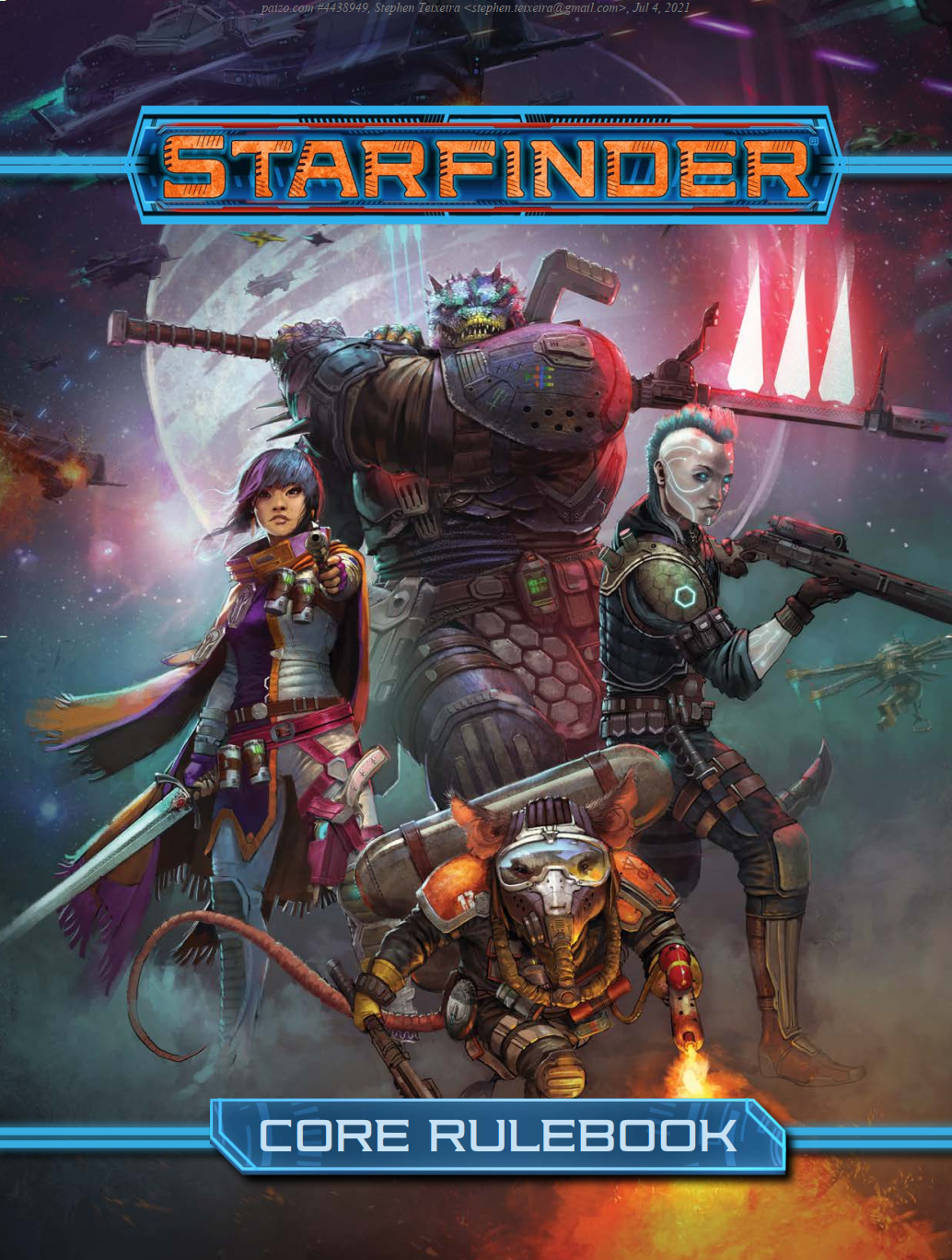
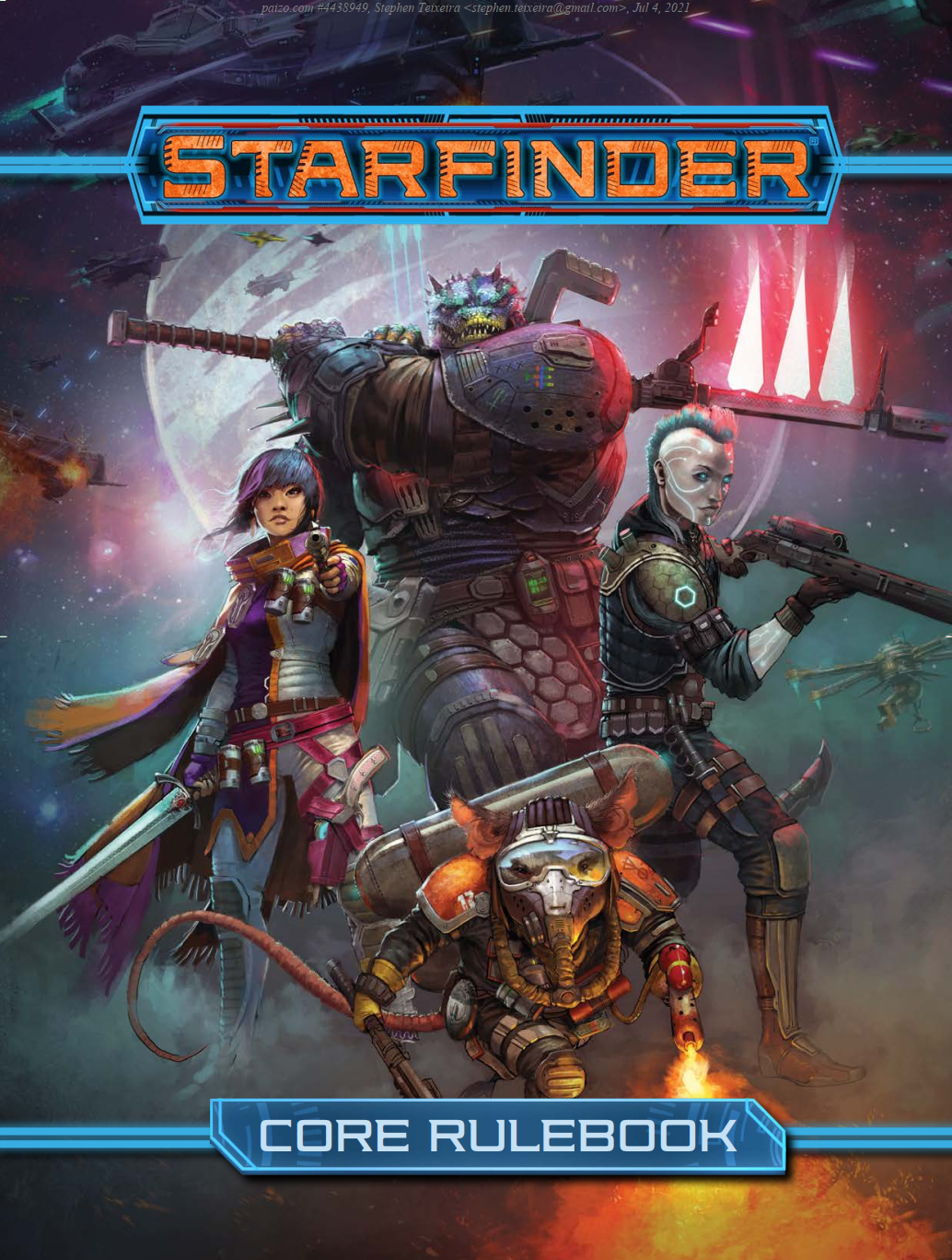
The ultimate magic space vans are in Starfinder, and they are given to the players for free to enable space travel, which, really isn't space travel it is just getting you to the next plot point. The upgrades are free and given to you by factions, and you can't find a starship cost chart anywhere in the game. The game seems like it gave up on starship economies, running cargo or passengers, buying upgrades, managing costs, repair costs, and every other economic impact of a starship. Starships in Starfinder feel like "adventure teleporters" that get you from one scene to the next.

There is starship combat, but it feels like a minigame instead of something the characters were built to excel at - all of the classes of the game were built for ground combat in mind, with starship abilities being add-ons to each class. The d20 Star Wars bias of "please don't make me play a pilot character" is a huge influence on the design here, as the game is focused on killing things with d20s in personal combat, and starship skills are "oh this class can do that too" handwaves.


Starship Economics

It felt wrong to me, like the designers either gave up on the entire starship economics system and assumed a socialist starship model of gaining ships, upgrading them, and letting governments or factions burden those costs behind the scenes. I can get why, our first Traveller campaign lasted one adventure when our PCs found a derelict ship, sold it for 8 million credits, and the now-millionaire characters retired after their first mission.

Yay!

Oh, we were really stupid kids back then and we never understood the fun of purchasing and managing starships in a broader economy. D&D trained us "the game is all about money" and since Traveller did not have levels or character improvement, we felt there was nothing left to do or achieve.

Star Frontiers changed the math and had a good upgrade, purchase, and cost game. We had a lot of magic space vans in this game and those always took away the fun of exploration and adventure. In the basic game, you were hex-crawling and exploring worlds. When Knight Hawks arrived, you were flying over the maps in your magic space van wishing times were like they once were and you were down there hex-crawling and exploring.

In a way, Knight Hawks did ruin the main game and remove the focus of pulp adventure and planet-crawling to "high-level starship adventures." We loved the base game, and we felt Knight Hawks was fun, but the focus of the game shifted noticeably and those fun planetary missions became afterthoughts.


The Mother of All MSV's

Of course, the archetypical magic space van was the original Millennium Falcon, and that ship will remain indestructible until the end of time, and even then the promise of corporate profits will keep that ship around as the legacy of the universe. Even in the sequel movies, this ship sits around for decades and just works perfectly without any apparent maintenance or care. I love the original movies and the ship, but hey, nothing lasts forever.

It is a bit foolish to put a piece of metal on an altar and worship it.

Someday it will break down and get sold for scrap. Or be destroyed in a blaze of glory doing something heroic, if lucky.

Our games were plagued by these too, these flying boxes that ruined all exploration, travel, and mystery, and the players could park them next to a threatened village of space creatures and blast away at the invading aliens with starship weapons. It got to a point where if I took the ship away my players felt insulted that I was taking away the easy answer. Then again, the design of the game and the rules made the magic space van the easy answer each and every time.

The game sucked and the universe sucked, and how we were playing it sucked.

There is no difference at that point between a magic space van and the players' teleporting castle and where they raise their pet dragons.


We're Sorry, Your MSV is Currently Offline...

Star Wars is partly to blame, it invented the cultural trope of the starship being this go-anywhere, do-anything flying house. At least in the old movies, the starships broke, were captured, got submerged in a swamp, and generally were not 100% reliable. As time went on, they felt more and more invincible. and we played a lot of games with these, and yes, even Traveller is guilty. A scout courier with a laser turret with a missile launcher is a powerful ground support weapon, it can land practically anywhere, go in and out of atmospheres without problem, and has weeks of fuel to burn jetting around in-system.

Some of the adventures for this game go out of their way to tell you "why you just can't use the starship" to solve different parts of the mission. You know your game has a problem if you are constantly trying to tell people why the magic space van does not work. The volcano has too much ash to fly near and is unstable! The local authorities do not allow spaceships above the nature preserve (take the boat on the river please, nudge-nudge, wink-wink)! Spacecraft flight in this area is too risky due to electromagnetic storms! The player's ship breaks down, oh no! As  I player even I would feel the railroad coming, roll my eyes, and begrudgingly accept the "reason this time" but know the game's starship entitlement systems are in desperate need of repair.

They are the prototypical "adventure ships" and that is probably the worst term to use from them since they take away any chance to get out there and adventure, without GM fiat and artificially saying "why they can't use the starship this time." The ship solves 90% of the adventure's "adventure" while the players just do a few social skill rolls and have enough combats to satisfy the video-game urge.

And by adventure, I mean running around, taking a jeep, climbing mountains, taking a boat, getting in a helicopter, and basically acting like the Uncharted's Nathan Drake on a world getting from point A to point B. You know, the cool stuff you used to do before you got lazy and just landed your starship everywhere.


DeltaV

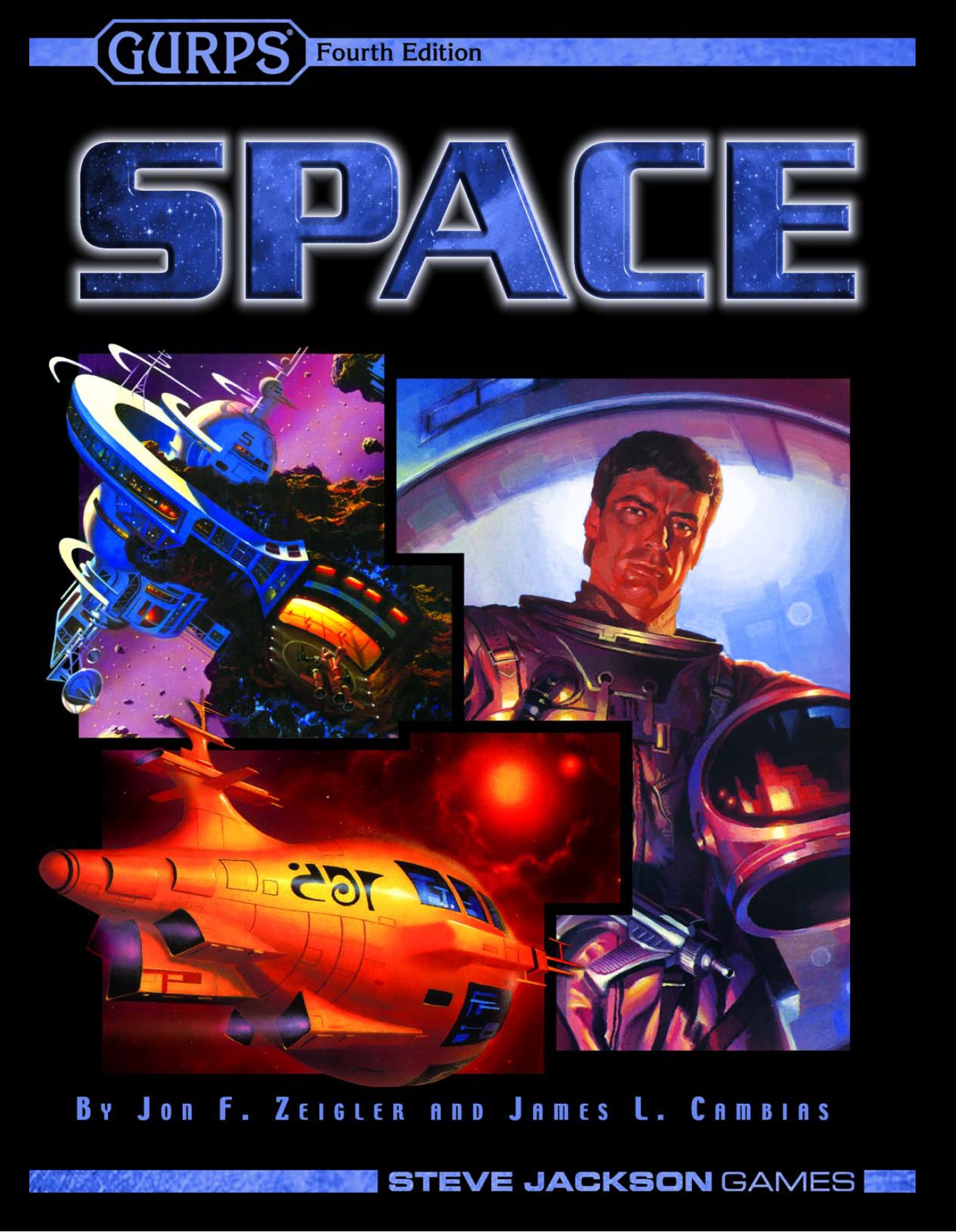
GURPS Space has this term called DeltaV, which is basically a measurement of a reaction thruster's fuel and time. How long can you accelerate for? Well, let's say you have 100 DeltaV and you want to get to Jupiter, or Mars, or a jump point. Well, let's spend 48 of it accelerating at 1G to a speed, stop accelerating, coast for a long time, and then turn the ship around and fire the engines in reverse to slow down. When we are there, we have 100 - (48+48) = 2 DeltaV of fuel let in the tanks. A little left to do orbital maneuvers, and if our ship can land, then land. Taking off is going to use a lot of fuel too, probably way more than landing.

Most ships would not be designed to land, you would have to carry spaceplanes or drop pods (that could carry cargo or ferry fuel) to do that job. You probably have one or two, and you can't lose them (or the pilots). They may be S/VTOL, or they could land like a normal plane on a runway. Fully loaded planes would probably need that runway.

And you know, since a lot of the engines in GURPS Space spew ungodly amounts of radiation, noise, shockwaves, and massive town-sized fireballs; it is really nice of you to land away from civilized areas, forests that can burn down, people in the open that will turn to ash, and places you generally don't want to leave fatally irradiated for a few hundred years.

Even hyperspace jumps would need DeltaV since the ships can't do a hyperspace jump at a certain distance from a star, so they may have to travel a week out to make the jump, and then have fuel on the other side to stop at their destination. The hyperspace jump itself could be just an instantaneous shift, but the flight time would be a long and possibly dangerous journey.

Get a fuel tank hit in combat? You better hope it was an empty one or you ain't stopping when you finally get there, or if your ship is segmented you could jettison 2/3rds of the entire ship and hope the fuel and engine compartments can stop with the reduced mass.

Hard choices must be made. Most of the beloved ship will be space junk, and if we get a new ship and it is still out there, we could head out and salvage it - if someone else has not already. Or pay more money and hire someone with a salvage tug - if you survive - to go salvage it.

But to me, that is cool.

That is sci-fi.

Land a spaceplane on a planet, take a space truck with large tires, and explore. The ship stays in orbit and must be protected by the crew. The space plane and the landing site need protection. Remember how B/X says you always need hirelings? This is what they do. Pay for a few dozen, put them in cold sleep, buy their gear, and defrost them to do dirtside work and security on the planet while your science team checks out ancient ruins.

Maybe you even start your space adventure career as one of those cold storage hirelings, woken up, given a gun and armored vest, and dropped onto a who knows where place to guard a landing zone. And things go horribly wrong.


Hard Frontiers

In fact, I like this idea so much this may be my next Star Frontiers campaign. We aren't doing the typical 1-6G Knight Hawks ships and magic space vans. These things will look like something out of the movie Interstellar. Very few ships will be able to take off from a world, do a jump, and land on another. Giant cargo rockets will constantly take cargo into orbit on hub worlds, and spaceplanes or parachute systems will fly it down.

No reactionless drives. Fuel and thrust are a must.

The great standard races will be there, but space will be a hardcore place.

The universe will be mostly unexplored, except for the main races' four overpopulated home systems.

The home systems will be developed, with lots of activity jetting about between every planet.

A few outposts and colonies will be out there.

And some will be lost as a new threat arises.

That feels like sci-fi to me.

Saturday, April 30, 2022

GURPS: Star Frontiers

Star Frontiers is one of those classic systems, and my first thought is, "Why would I ever play it with another set of rules?"

Well, this is probably going to sound like heresy, but I did a second playthrough of the Volturnus series, and I hated the melee combat in that first part of the adventure. Having 4-5 crew members doing 1-2 points of damage a turn and praying for knockout results was so unsatisfying I ended up having the only crew member that knew martial arts get the pirate into a hold, and the rest of the crew beat the poor idiot with their fists.

And it felt like one of those moments where another pirate would have filmed this with his cell phone and the video would have gone viral.

I know, use clubs at a minimum, but the chances to hit were so bad the entire fight felt like it would have never come out right or had any sort of satisfaction. Ranged combat and melee combat with weapons in Star Frontiers? Great stuff, pulp action, and fun! Bare fist combat without the martial arts skill? Ugly. Yes, I still love the system, and it is one of the all-time greats. But it needs some love and attention in a few areas.

Also, beyond random ability scores and broad skill categories, the characters felt the same. I did not really get the feeling my starting crew was really cool and different from each other. Star Frontiers always has a special place in my heart, but the game is sorely in need of a revision. Frontier Space by DWD Studios is a cool upgrade to the d100 engine and one I want to try after I run through my current experiments with a few different systems.

Yes, I am saving that for last since that is where I expect to end up.


The Starfinder Experiment

Well, I tried a Starfinder version of Star Frontiers, the D&D 3.5-ish sci-fi system with the leveled weapons, armor, and gear. It was a fun run but turned out to be way too crunchy and strange in terms of the ownership and upgrades of starships (they were free). I had this very strange situation after the first adventure where the characters were level 3-4, broke, and could not afford the upgrades they needed to make in order to play the level 3-4 content. It felt like a video game with leveled gear, and my first thought is they could not continue their adventure, they had to go somewhere and grind for upgrade money.

And I did not like the space goblins everywhere. Honestly, I am a bit tired of the Paizo goblins everywhere used as cheap toss-in enemies, and in every adventure, you could count on them being in there as filler combat fodder. My brother would have called them space herpes (when used in this context). But as bad guys, I feel they are overused punching bags (they do deserve more respect, they are a character race), and the entire universe feels weaker by having them be the idiots you walk around and callously kill for "combat fun."

See also, insane robot enemies, which I also feel are overused as combat filler. Starfinder has this strange problem where they take anything that could be a cool bad guy, like the obvious one, space undead, and make them a friendly allied faction (the Beginner Box adventure). Come on, zombie soldiers, space ghouls, space demons, cyber skeletons, and space vampires in starfighters are cool bad guys.

And telling the space elves and dwarves to "get to the back of the book" and mostly ignoring them was such an insult. Not cool. The goblins are there and a part of the universe, why the bias?

Combat was fun in that d20 way, but magic was way too overpowered. Most of the party were flinging 1d4 lasers every turn and feeling like they were never doing much, and the mage could cast 20 hit-point nukes and one-shot most anything, once on a crit. And then the adventure out leveled them, they had a starship and were broke, and those 3d4 laser pistols everyone needed were out of reach.

The only thing that worked was AoOs with that gas grill on a polearm thing, but even then swinging that thing around in close quarters meant setting people's blue hair on fire and causing third-degree facial burns to your friends.


GURPS: Star Frontiers?

I know this has been done by a few people and they say they like it. I wanted to do this but gave up until I had the latest GURPS Character Assistant software and became somewhat skilled in using it. Now, I feel I am ready to dive in.

For me, I would ditch everything about the Star Frontiers gear lists and just use the GURPS equipment and weapons, and keep the original setting and races. I would not try to convert every weapon, power clip, and tool kit. This would technically be GURPS: Space in the Frontier setting more than a 1-to-1 conversion of everything in the original rulebook. I want to be able to use GURPS Character Assistant and not be converting in gear, so if something has to go, it will be the old gear and equipment.

And another thing, treat all your characters as specialists. The most frustrating thing about designing a GURPS character is sorting through those skill lists, so it helps a lot to create a small history for your character and take them through the training and experiences they had in life. You will never make a jack-of-all-trades character in GURPS, nor do you want to.

And yes, your skill with GURPS starts with being able to sort and pick skills. Design a lot of different characters and it will come to you. Also, remind yourself you are designing a character that isn't going to be great in one thing, but okay in everything they experienced in their history so far.

Great comes later.


Know Your TL and Technology

Another helpful thing to grasp is what technology you are using. In my game, my pilot character will have the fast-starship piloting skill since he does not fly the slow space barges. He only needs hyperspace pilot and repair skills and not FTL, since there are no Star Trek FTL warp drives in this universe - just hyperspace. He knows how to fix a limited subset of stuff, like his explorer truck, basic starship engines, armor, electronics, a hyperspace drive, and a few other components. He needs a crew to do computer, sensor, communications, weapons, or medical systems repairs. He used to drive his explorer out to the woods on weekends as a teenager and go gil-jet flying.

If we set tech-level at 10, we are doing reactionless drives at 0.5 or 1G (std/hot per engine). This is about Star Frontiers level speeds, and you will be taking a few days to travel between planets. I don't really want to be doing the Traveller fuel thing with the large fuel tanks and the DeltaV calculations, but you can with GURPS Space and that is cool. The fact the system supports both and gives you all the math is amazing, and I would assign that task to the navigator player and have them do the work.

Though I could do the fuel tank and DeltaV thing, and I have that option. That would be a lower-technology Star Frontiers, more like some of the imagery in Knight Hawks but without the reactionless drives. The more I think about DeltaV the more I like the concept since this is how airliners work, they burn a lot of fuel just the get airborne, cruise for a long time, and then burn fuel to land. The entire high-fuel usage game has never really been done right in sci-fi games, even in Traveller where it is just hand-waved off as too complicated.

High fuel usage and slower ships put piloting and navigators at a premium and make them more important to the game. It does reduce the "hop in the space truck and go" style of gameplay (and even Traveller fell into this because it was so appealing). Your starships will be "orbit to orbit" models that carry spaceplanes for getting down to a planet's surface. There will be a lot of quiet time after initial acceleration as you coast through the void, and then the rumble of engines as you burn down to decelerate on that long-graceful arc through nothing to your destination.

Then you need to use your space planes to find fuel to bring back to the ship and refine if there is none there to use at a spaceport.

The "magic space van" is dead, and just crewing a floating tin can in an infinite nothing becomes the game. Your skills and teamwork inside that can become the game, almost like a WW2 submarine movie but in space. And when you get to a planet you tend to stay there a while, so you will need a ground game and be able to work on your feet, with your ship in orbit the "mothership" that still needs to be watched over and protected. Your spaceplane pilots too will be important and vital parts of the operation.

There are a lot of moving parts to this type of game, but it sounds cool and it is very unique.


Nostalgia, Not Always Great

I also made some assumptions about the universe like laser weapons are the most popular hand weapon, so he has an ablative anti-laser suit as his primary armor instead of the typical Star Frontiers ballistic skiensuit. He has a backup ballistic vest in case the lead starts flying, but it is heavy so it is in his combat loadout. Star Frontiers assumes more projectile weapons than beam, and I am flipping that to move the universe on a little. Laser pistols in GURPS Space have like 60+ shots to them (with a reload that weighs 0.5 pounds), so why not?

I am guessing projectile weapons are still out there, such as the rare needler, or gauss weapons in specialized military units. Projectile pistols that fire this cased ammo (brass, gunpowder, case, primer, and the machinery needed to put them together) would be rare since the universe has moved on and manufacturing them - compared to powering a laser pistol or making a metal slug for a gauss weapon - are not really necessary anymore.

This is a great example of changing rules and reexamining the assumptions game designers made about a game world back in the day. Back in the early 1980s, lasers were new and there was mistrust of them. We needed projectile weapons as backups. It could rain you know! And gyrojet weapons, which were a thing in the late 60s but never saw much use. These days, if you look at how technology relentlessly moves on and the old stuff is thrown away constantly, you can see a world where the standard sidearm became the laser since it is cheaper, easier to get ammo for anywhere (just recharge the power cell), and times move on.

Note, that these assumptions will also affect the world greatly, as we will see soon. The feeling and tone are going to change here, so if you want something more action-oriented and pulp, GURPS will not be your thing.


Now Hiring: Starship Crew, All Positions

He knows nothing about communications gear and security systems, and he only has basic knowledge of sensor operations and navigation. He can probably get between planets by himself, but he needs a skilled navigator for hyperjumps. He needs a ship's doctor. He needs a weapons repair specialist. He needs gunners. He needs a communications expert. He needs a computer person for operation and repair. If he were to crew a large ship, he is going to have to start earning and hiring.

In Star Frontiers, one person could probably do most of this stuff. In GURPS, forget it, you would be spending points all over and never be great at the things you want to be great at. Give yourself the few things you will eventually be great at, a background in a few other areas, and let the rest of your crew pick up the slack.


Hard Science Star Frontiers

If you ever thought Traveller was hard sci-fi, think again. I am loving this level of detail, and I actually feel like I am playing hard sci-fi. I am doing math and travel calculations, my crew has to worry about all sorts of crazy problems if the ship takes a laser to the midsection, travel times between worlds are days, systems can break down, and skills matter. Even just thinking about some of these campaigns gives me a lot to think about and consider. Part of the fun of sci-fi is that space survival game, where math, time, distance, and space matter. 

If some games fuel matters, along with time and distance.

If sci-fi is too easy with magic space vans taking you anywhere you want to go, then why not just play fantasy? You are at that point. Only this is an easier version of fantasy with instant communication, rapid transportation, and credit cards. Sci-fi has to be more than just a Guardians of the Galaxy me-too game with bullet sponge enemies and snarky humor.

I like it when things are not easy.

When your ship is the only one that can carry a life-saving vaccine to a world in a week's time, you blast off, and your sensors pick up a ship that will intercept you halfway there - and you don't have the fuel to outrun them.

You just have enough fuel to decelerate when you get to where you are going.

You just sit and watch for days as they draw closer. They don't respond to radio calls. You do not know what they want. You can't identify the ship by using your ship's telescope, but they are armed.

You wait. They start to decelerate to match your speed and vector. You are both locked in this fight, but you still have a day to wait before they are here.

And you know when the ship gets into weapons range all hell will break loose. You pray they don't hit the fuel tanks or the cargo bays.

And there is nothing you can do but wait.

A billion lives depend on you getting to that tiny sphere out your front window, and there is no way anyone can help you.

When the time comes, your crew says a prayer and gets in their spacesuits, the gunners get in their turrets, you depressurize the ship, trip the red alert, and those last few minutes pass silently...

That is great sci-fi.

Saturday, January 29, 2022

Star Frontiers & FrontierSpace

One of the hardest things I did recently was shelve all my old nostalgia games. I got to a point where I had a very nice collection of OSR games, plus a few new ones I wanted to try, but my legacy collection of games kept sitting there and silently demanding attention.

I love them, my brother and I played them for years, and those will always be a special part of my life.

But there is a point where I felt they were holding me back from having new experiences. Also, buying reprints of them and being in fan groups for them felt like that was holding me back from trying and enjoying the new stuff. I still am in those groups (and I do have a lot to add), but I want to make time to explore new games and join new communities.

And while I like having POD reprints of the classics, sometimes having them means they demand attention and they take time away from indie creators trying to get attention and coverage. While I love my classic games, I love the excitement and new ideas that this generation of publishers and creators are bringing to the hobby. Instead of giving money to a billion dollar corporation for a POD legacy game they no longer really support, I would rather give that money and attention to those fans and creators working in a basement somewhere to create new and fun experiences.

I realized I can't always be looking behind me, and that was holding me back from discovering games that I may love. Any game - even newer ones - can become an obsession like this too and prevent you from exploring and finding yourself.

I love you old games, but with limited time and attention I would rather give that to people out there trying to build something new and cool. So with that in mind, I wanted to collect some of my thoughts on nostalgia games and the systems I am using today that replace them.


FrontierSpace

What could ever replace Star Frontiers for me? The classic game my brother and I played for a good amount of our lives, kept us excited about science fiction, and was a great "other universe" from the tentpole franchises of Star Wars and Star Trek. One I am looking at now is the excellent FrontierSpace game from DWD Studios. This is a classic d100 style game with an excellent action economy and support for ability scores and skills over 100%. 


Star Frontiers Unarmed Combat

The hand-to-hand game seems light-years better than Star Frontiers, which limits unarmed damage to the few points of your Punching Score, no damage dice, and has you hoping for a 01-02 roll or "ends in zero" roll for a knockout result in melee. Or getting someone in a hold with martial arts skill while others beat him for a few points of damage per hit.

I tried replaying the Volturnus modules with the original rules and the first "escape the starship" scenario fell flat because of the unarmed damage and combat rules. They game felt and played "wrong" to me, like there was something missing. This wasn't an OSR "then make it up" moment, the rules laid out options and none of them felt really great or worked well.


FrontierSpace Unarmed Combat

In FrontierSpace base unarmed damage is 1d5+melee damage bonus, and those with the warrior skill (basically melee combat) can buy a skill benefit and do 1d10+damage bonus. You can multi-attack too as much as you want as long as you can stomach the cumulating -20% extra action penalties (which also apply to defense).

The unarmed skill also has a great assortment of abilities and bonuses when fighting in melee (purchasable with development points, DP). They can gain improved dodging against being unarmed versus armed opponents, multiple attackers, and dodging ranged attacks. They can get a massive bonus when using two-handed weapons or dual-wielding, and even can conceal melee weapons. 

All of these bonuses can be bought with improvement points as the character gains experience, so their skills improve in unique and interesting ways. If my player wanted to create a new skill benefit, maybe one based on a feat, power, or special ability from another game (for example, bonus sneak attack damage or blocking missile weapon attacks with a laser sword), that could be written up, balanced, and dropped alongside one of the existing ones they give you and purchasable as you gain DP.

There is a lot of customizability here, and with benefits existing for every skill, the system is incredibly flexible and adaptable to anything you could want or add to it. The melee game in particular feels a lot better than the original game this was inspired by.

In our legacy Star Frontiers campaign one of my brother's main characters was a melee fighter and Star Law Ranger. This set of rules would have made my brother very happy and his character a lot more fearsome than the Star Frontiers version. In our legacy campaign we ended up switching rules a few times to get that feeling, and the base game never really did a good job at making his character feel powerful. Here, he could customize his Star Law Ranger into being one of the most fearsome melee fighters in the galaxy and have the special abilities to back it up.

This is one of the advantages to playing a more modern set of rules written by fans of the original, you get so many of these "play improvements" that make the entire experience a lot more satisfying and interesting than the original game. You get a high degree of character customization. This game feels like a next-generation Star Frontiers to me.


The Setting

I love the original Star Frontiers setting, and I know I would port the original setting races into any universe I play with these rules. The original Star Frontiers setting said "the original races came together here" so there are a few questions hanging out here. Did they gather anywhere else? Where did they come from? Are there any others out there?

So there is enough latitude to create your own map and universe without playing on the original Frontier map. You could add new races and have them intermingle with the existing ones. You could also have a mysterious race of worms show up and find this area of space and salvage a lot of the original lore and conflict without sacrificing too much.

The included setting in FrontierSpace is workable, I like the fact there are are different governments to deal with and to have interacting with each other. One thing the original Star Frontiers setting lacked were different areas of space controlled by different factions, things felt very much a uni-faction with one Star Trek style Federation (UPF) running everything.

I suppose if pressed, I would do a more grand sweeping space opera style setting, with ways to return to the original home-worlds of the major races (via slow travel space arks), some home-world factions involved, and more main-map factions and areas of space. Maybe make some of the new races native to this "crossroads" area of space, and put an over-arcing metaplot in place. Something like the crossroads is an area of dense and heavy metals and natural resources, the only place like it in thousands of light-years of low-density space, and the resources extracted from here are critical to the home areas of space of the major races.

Without these raw materials the home worlds will stagnate and exploration will eventually grind to a halt within 100 years. Every so often a new mammoth space ark shows up from the home-worlds after a journey lasting hundreds of years, new factions are introduced, population for a new planet is awoken, and the space ark is loaded up with raw materials for the trip home that will take hundreds of years.

With this campaign setup you could drop the original Frontier setting in there as a home-world faction and area of space that is supplying colonists to this area of space and have that nostalgia hit while keeping things in the newer campaign setting fresh.


Technology

The technology level is different, the ships are a bit more advanced with antigravity and speedier travel, but since the timeline could be advanced or reworked, that isn't too much of a problem. Again, if this is a campaign set after the Frontier timeline and that area of space has been depleted of resources and we are playing 500 years in the future this all works.

Star Frontiers works best when it is "D&D in space" with a mix of modern-style RP, hexcrawls, dungeon adventures, and space combat added on as a fun, almost cinematic, battle where everyone gets to take part. You put too much advanced technology in there, all-seeing scanners, teleporters, real-time instant interstellar communication, and you lose a lot of the adventure elements the game depends on to be "D&D in space."

This is the same problem "too much divination and teleportation" magic that D&D has, and it applies to sci-fi as well. If character have no need to leave their starship, can scan a planet and instantly find the crashed and stolen satellite, and lock onto it and beam it up to the ship there is no need to get out of the ship at all. You have to start inventing reasons why "the scanners and transporters" don't work, or why "instant communication back home doesn't work here."

For good "pulp adventure sci-fi" there has to be work, travel, and going down there to see what is happening. You can't shortcut player investigation and face-to-face interaction with a button on a console.

With super-tech, you end up doing more work finding reasons to limit the unlimited than you do in crafting fun adventures. It gets tiring after a while, which is why everything needs a cost and limitations - magic and technology - in order to have that classic adventure experience.

To be honest, Pathfinder 1e with unlimited first and third party expansion-books ended up this way for us too, you can literally be a mage and solve every problem in the world with a near zero-cost spell. You didn't even need other character classes beyond a cleric for heals and resurrections.


Starships & More

To keep things simple I will probably use the FrontierSpace ships. I had ideas of mixing in Traveller ships, but that feels like too much of a jumbled mix of rules and ideas to work practically. If I go with the assumption this is a 500 years after Star Frontiers setting the only thing I need to keep are the Frontier races that I would like in my game, and possibly use the others in FrontierSpace as expansion material.

It is one of those things, if I am moving on to a new rules system, keep things as much as possible in it and give it a chance before changing everything. The few things I want to keep, some of the legacy lore, can be added easily. I don't need everything from the original rules except the races and the original setting still being somewhere "out there in the stars."

I still would love to do a Traveller-style campaign with these rules, but I may have other ideas for Traveller I want to explore. For now, keeping what I loved about the original Star Frontiers and upgrading to a new set of rules seems like the best fit for this game.

This game really is a better fit for Star Frontiers than the original, at least for me. This is one of those few non-B/X games that is on my "best games" shelf and I look forward to diving in.

Thursday, January 13, 2022

Traveller: Jump, Acceleration, and Sizes


Through the years the sizes and jump capabilities of Traveller ships have changed, and I feel a lot was lost or just ignored along the way in pursuit of universal design systems that were more percentage and math based than design based.


Classic Traveller

With just Book 2 Starships , the largest jump-6 and 6G ship was 2,000 tons. At 3,000 tons the best you could do is jump-4 and 4G. At 4,000 tons, jump-3 and 3G. At 5,000 tons we can only manage jump-2 and 2G. And this is putting the largest engine possible in the ship. And there were no ships above 5,000 tons.

That is how we started playing the game, and that is all we thought existed in the universe. No ships were larger than 5,000 tons. If a planet went to war, it had to be close to send in larger 5,000 ton battleships, or they made due with a number of lighter ships in a task force.

This was different than Star Wars or Star Trek (it was the early 80's at the time), and frankly, it was cool. We never knew about High Guard, so yeah, we were in for a huge surprise. This was a universe built around the physics that smaller ships mattered, and that was it. It felt sort of like the wooden sailing ships of old, there is a point where they can only get so big before they either get too heavy to sail, or structural issues with wood start appearing and the ship is too heavy to hold itself together. Here, the limits of technology can only do so much and an entire galaxy has to deal with building and exploring with vessels under 5,000 tons.

To go fast, you went small. Large cargo ships were these jump-2 haulers that needed to carry 2,000 tons of fuel and engines and could at best haul about 2,000 tons of cargo for only 2 parsecs. A military ship of that size could only do jump-2 and 2G, so you did not see them everywhere.

Small ships were where it is at. And the players' ship had a chance.

When High Guard came in, 50,000 ton battleships could do jump-6 and 6G acceleration. The formulas were math based, and there were no limits built into the game. We lost interest in the game and went to Star Frontiers, which did have that "larger ships are slower" assumption.

Also, the first edition of the open gaming Cephus Engine has the classic Traveller 5,000 ton jump-2 and 2G limit built in as well.


Mongoose Traveller 1E

The maximum ship size has dropped to 2,000 tons with jump-4 and 4G being the limit of the game's ships. This is actually a bit of a downgrade from classic Traveller in both size and performance. The ships have gotten lighter and a little slower. The engine table still exists, and performance is tied to those standard engines. The M1E version of High Guard goes percentage and allows maximum performance for all ships, so you can have the 50,000 ton 6G jump-6 hotrods (and have little space for other stuff, but it is possible).


Mongoose Traveller 2E

This gets rid of the performance limits based on size and goes to a straight percentage to a limit of 2,000 tons. With High Guard this tonnage limit can go into the hundreds of thousands. All ships can do jump-6 and 6G, provided they pay the tonnage and fuel costs.

The newer Cephus Deluxe also does away with the table of engines and drives, and goes straight percentage for everything as well.

The old size and engine limits are gone, and this was a huge part of the attraction of the original Traveller game for us. Even though High Guard existed it could be ignored, and that base game felt like how we remembered it. With everything so math- and percentage-based, designing ships doesn't feel like working inside tight size and speed limitations anymore, and everything becomes possible. When everything is possible, nothing is interesting.


There Were Physics Here...

The concept of there is some sort of hard-science limit to how heavy a ship could move and jump based on tonnage in the older editions, and without High Guard. There was a sweet spot for ship size and performance based on role in the middle. Not all ships needed jump drives, if a system had a lot of planets you could have a militia with ships without jump drives defending the world and performing space patrol duties in-system only.

But there was a size limit in the original game, basic game only, that sort of continued into later editions before it was dropped. Without High Guard, Traveller was a different game. It was a game we liked better because the ships were not so open-ended. Smaller ships meant something. Often times, they were all a system had to get the job done.


Knight Hawks & Star Frontiers

Only Star Frontiers' Knight Hawks brought this back with G-acceleration of larger ships being slower, and that was fun for us. Small ships meant something again. You could not outrun star fighters in a freighter, they were going to catch you depending on the time, fuel, and distance between the sides. The slow-lumbering capital ships could be out flew and outrun, but they were dangerous up close. Swarms of faster fighters could weaken a larger ship, but it was very dangerous and they had to get close. Assault scouts were the ultimate adventure ships, and could become the subjects of legends. The on-map hex combat game was very fun.

Most importantly, that feeling of space physics was back, not in jumps but at least on the combat map. We would have loved the jump-game to be factored in, but we made up our own rules for that. As a result, we stuck with that game for decades and enjoyed the ride, and Traveller was kind of left in the dust between the stars.

Wednesday, January 12, 2022

Mail Room: FrontierSpace

Back in the day, Star Frontiers was our game. My brother and I played that since it came out, and ran an epic campaign that lasted decades. What we loved about it is the game setup a sci-fi sandbox and let you go crazy with all sorts of adventures, starship battles, and exploration all across the universe where a small starship and crew could make a difference.

Contrast this with Star Trek and Star Wars, which can feel like the only way you can make a difference in the galaxy is with a giant battleship and fleet of capital ships. Yes, there is always the small smuggler ships and Edge of the Empire went a long way to restoring the small ships matter feeling, but every movie that comes out works against you in it puts into your mind that bigger and better is the only way to affect change in the galaxy.


Small Ships = Adventure!

This is also why I like capping the size of ships in Traveller to the original tonnage limits in book two to the 5,000 ton maximum, and the best drive performance you could get out of those "battleships" is only 1 or 2 G acceleration and jump 1 or 2 as well. Got a star 4 hexes away? Sorry, not going to encounter any ships larger than 3,000 tons there, and that ship would be loaded with Z drives. Small ships could frequently outrun larger ones, and you never got these 50,000 ton 6G acceleration battleship hot rods like we had in High Guard (that could also have jump 6). The game became Janes All the World's Navies at that point and a lot was lost.

Yes, Star Frontiers (with Knight Hawks) had battleships, but there were very few of them in the galaxy. You could outrun larger ships in a small ship. You had to watch for starfighters. The low-level starship game felt really good. Everything else came from that model of starship reality, and the planetary ground game was a direct result. How planetary militias worked. The exploration game. How ships got hired for jobs. What ships got sent to investigate mysteries and respond to emergencies. A small team in a smaller ship could make a difference.

If an outpost in a far away star suddenly goes silent, sending a small adventure class ship to investigate was the first choice. In a universe with modern space navies, the planetary government is likely to send a destroyer out there with a few hundred troops, with escorts, and your scale gets messed up. There is no reason for smaller ships and those classic one-party adventures.

If a sci-fi system does not balance ship size, speeds, and jump distances it gets boring quickly for me because the universe will go to the biggest ships with the biggest fleets. The small-scale sci-fi adventure I love is lost.


FrontierSpace

So I got FrontierSpace in the mail last holiday season, and I am just starting to give it a look. This uses the same d00 system that is instantly familiar to players of Star Frontiers, Gangbusters, or Top Secret - but the system is very different and has a cool action economy where you can attempt as many actions during a turn as you want, it is just the one after the first gets a -20 multi-action modifier, and that modifier sticks around, accumulates, and becomes your penalty to your defenses.

Lose initiative and want to make two resistance rolls to dodge attacks before you get to act? The first is at +0, the next is at -20, and your turn starts with a -40 action modifier for your first action, a -60 on your second, and so on. This creates a sense of tactical play over the turn and benefits high skill levels tremendously. It also creates a betting game where you can push your turn hard and try to slip in one more action or attack, and possibly pay the price later. The multi-action penalty resets on each combat turn, so you begin again at zero.

Otherwise, the system and mechanics are very similar to the d100 games we love. Simple, fast, and fun.


Standardized Ships

FrontierSpace comes with a list of standardized ships, and from what I can see, no ship design rules. One could say Knight Hawks also had standardized ship designs, but they had a design system that worked for civilian ships (the military ships were allowed to break the rules). I would have liked a complete design system, but that isn't a deal breaker.

Ships have standardized ranges and fuel consumptions, anywhere from 0.5 to 3 LY per day, one fuel is used for each LY traveled, and fuel tanks are from 20-80 units. There is no benefit for smaller ships, and the larger ships appear to be faster in inter-star travel with longer ranges. I prefer smaller ships being faster with longer ranges, but the ships look well-designed and built for adventuring. Not what I like, but not a deal-breaker again.


A Better Star Frontiers?

From everything else I read, the game feels very complete with more options than the original game in gear, skills, weapons, robots, vehicles, and development options. I am liking what I see a lot, and this looks like a more modern game that is well supported that I would support over the legacy game (even though I love that game).

I prefer to support the indie and newer games over the legacy ones, since people are making a living off of these games and efforts, the community can often develop new material for them, and there is a lot of potential for fan creations and support. With legacy games often you just buy the game for nostalgia and there is not new content being made, so there isn't a future in the game where the community can join in and produce new material.

The races are like the Star Frontiers ones, with a few being very similar. Nothing is stopping you from taking the classics Star Frontier races and using those, or playing the classic Frontier setting with these rules. You do get a few cool new ones, and robots as an option. You could use all the races together, this is sci-fi, so most anything can be dropped in and work.

The original Star Frontiers has some weaknesses, like the very low unarmed damage, and the high ability scores and skills feeling uninteresting as you can't do much more with a high score other than get automatic hits. At least here you can push extra actions and resistance rolls, so high scores can really work for you in FrontierSpace. The game here is much stronger than the original.


New Ships?

You could also use Knight Hawks ships here too, but the ship combat balance would definitely be affected by the multi-action system in FrontierSpace. It may come out better, overpowered, or worse. Same thing with dropping in Traveller ships, you get turns where you are firing three or four attacks with some of these ship weapons that were only designed for one attack a turn and things I bet can get very deadly quick. Still, if you allow pilots to dodge attacks with resistance rolls everything may balance out, but this is a "try it and see" thing.

I mention this because my first idea when I saw this game was to use Classic Traveller starships instead of the ones here to get the space game feel I like. The ships in Mongoose Traveller are a bit different, and tend to be more High Guard with percentage design rules than the classic table based ones. So this would be a Traveller-like map and star travel experience with a modernized set of Star Frontiers rules driving the action.

It may work.

Or I may put my hacking and modding urges aside and play with the ships they give me. This would probably be a better idea because if I am new at the game I need to understand the original system balance.

But I do like hacking and modding games.


More Soon!

I am excited about this game, and I got the other games in the series as well that use the same system for fantasy and spy games. This feels like the perfect game for d100 play, modern, supported, exciting, with an action economy that burns up high skill and ability levels quickly for some awesome action at the table.

I need to play a few games and check this out for sure. Who knows, maybe a replay of the classic Volturnus series with a new engine under the hood? Sounds like a great time.

Monday, October 10, 2016

Planned Systems vs. DIY Systems

Some pen-and-paper games lay out everything for you and make your choices for your character as you level. You get a level, and the system says you get X and Y powers, ability scores, and hits. These are planned systems, and some good examples of them are:
  • d20, Pathfinder, and D&D
  • Basic Fantasy and Labyrinth Lord
  • Fantasy Age and Dragon Age
  • Most class-based systems
  • Most MMOs
Some pen-and-paper games are DIY (do it yourself) games, and often these give you a number of "character development points" to use anyway you would like to improve your character. Some examples of this type of game include:
  • Savage Worlds
  • Legend and Runequest
  • GURPS and Champions
  • Mongoose's Traveller
  • Star Frontiers and many of the TSR Boxed Games
  • Most classless systems
And some fall in the middle:
  • Fantasy Flight's Star Wars System
Planned systems are great for newcomers, because it is a lot easier to say "you get this and that" when you level instead of spending time sorting through the rules and the book asking the question "is this a good choice" over and over again. Believe us, we have been there, and you practically have to teach every new player the complete set of rules when they first level up with a DIY system. Otherwise, how would they know what is good?

Planned games protect new players from making bad choices, and balance the game based on prebuilt and predictable "endgame" builds.

We prefer DIY systems, because we like making our own choices when we progress characters, and we are more experienced players who know what we want when we build characters. Some planned systems have elements of choice (skill points and multiclassing), but a true DIY system foregoes classes and balances the game around skills and task resolution. Personally, when I level a character, I don't like feeling limited to the choices the game makes for me, especially if that wasn't the direction my character was going in during the last adventure.

If my warlock spent most of the last session socializing and roleplaying, why should he advance in "warlock power" at the end of the night? Shouldn't something reflect his learned ability in socializing and people skills due to this experience?

With a planned system, it is difficult to reflect those experiences and often you end up a better warlock and just as bad as a talker as you started. Warlocks aren't talkers, are they? That's a bard! So do I have to take a bard level now? Great, hand me a lute and paint it black.

With a DIY system, I put some skill points in a social skill reflecting what I did that night, and I am done. How did I get those XPs? Shouldn't those reflect my experiences? My warlock powers don't increase because I didn't use them, but who cares? If this campaign is all about talking, I am all setup for the next game with a little better oratory skills under my belt for next time, and I am happy. If next time we have a swashbuckling adventure I may pick up a sword skill or two.

Does it matter I am not progressing along a game designer's pre-planned class advancement track? Something the company spends countless hours balancing and tweaking to get "one" advancement experience perfect? No, it doesn't. My "advancement track" is the adventures I go on, and if I end up more of a glib, sword swinging practitioner of dark magic than a pure 100% power-level don-nothing-else factory-stamped-out warlock I don't care. My guy is my guy, and the adventures he went on made up the skills and powers he collected along the way.

DIY systems focus on organic advancement and balance the game on skill rolls and task difficulty.

DIY systems don't really have predicable "endgame" character builds, you just become very good at doing the things you do the most. You may end up the world's best talker, but if that is what you enjoy having your character do at the table, that is a good thing since your character advancement reflects what you are doing when you play.

Planned systems also tend to have these "pre-balanced" endgames, where the fighter will always have X attacks at Y to-hit, and be able to do Z damage a turn. Since the game designer "planned" this out, relative character power between classes is easy to calculate, and the "end game" monsters are easier to balance, Well, they should be, but a lot of planned systems typically don't take a lot of factors and exploits into consideration at the higher end (conditions, initiative, and turn denial powers) and things fall out of balance easily.

This is why a lot of competitive multiplayer online games are (or end up being) planned systems. You saw this in World of Warcraft's evolution, a lot of DIY systems were dropped to put characters in predictable, damage-and-healing-output-known envelopes. PVP and PVE balance in these games equals challenge and fun - at the cost of letting you level up your character how you choose to play.

D&D 4 was like this for us, at the high end the game fell apart for us because of the amount of stuns and other powers that rendered foes unable to act during a turn, and also our characters felt like they were getting competitively weaker versus the monsters they faced. The end-game tactics broke down into: go first, deny the enemy his turn, load it up with conditions, and beat on it with "whatever power you have" until it succumbs. The game wanted to be battle chess (which it was for us at low levels), but the high-end game did not work - at least for us.

With a DIY system, the endgame can be calculated if you do a little math, but the end-result is typically a flatter power level. The numbers usually don't get way out of balance, as the system is usually balanced around task resolution. Better skills can lead to a higher DPS and damage output in a DIY system, since you are hitting more and you may have access to special combat moves and abilities you purchased with your points. The Star Wars RPG by Fantasy Flight does a good job with talents and making those unlock higher levels of combat power, so there can be a calculated "end game build" with a DIY system - it just takes a little more design and forethought.

What character advancement system you like is of course, up to you. There are times when "I don't want to think" and I appreciate the simplicity of a planned system. I still like Fantasy AGE a lot, and I feel it is a great, stepped and balanced design that does a better job at planned advancement than most d20 based games. It is a more modern design with a hybrid "choice plus planned advancement" that I like, and it is a fun and simple model and great for new players. One problem with this model is that if the game designer doesn't think of a role, it is not viable - such as Dragon Age vs. Fantasy Age and the rogue archer issue.

We still like DIY advancement systems for our games, since it fits our play style better. We run wide and diverse games, and they don't always fit into the box of a planned class box that easily. For us, what happens at the table that night is how the characters advance, and if the players want to go sword swinging and combat one night, they can reward themselves with those skills at the end of the night and get a little better. If all we do is roleplay and socialize with NPCs, that is what is rewarded at the end of the night. It fits how we play and gives us a better sense of satisfaction when players figure out rewards, and it also reflects how we play and what happens around our table a little better than a planned system could ever account for.

Thursday, July 16, 2015

Design Room: Star Frontiers

It was one of the best half-a-games of the early 1980's. I say half-a-games because this is a science-fiction roleplaying game that was released without starship rules. We ended up cribbing starships from Space Opera and Traveller for our games until the Knight Hawks rule set came out, and by that time the damage was done and we were left with a mess of a shared universe experience.

This was one of the great d00 TSR roleplaying games back in the day, and it overshadowed everything else in the TSR d00 library, like Top Secret, Gangbusters, and others. It was also one of the industry's first real conscious breaks from the Star Wars behemoth, with a believable and complete sci-fi world that had nothing to do with Star Wars at all. Star Frontiers is science-fiction gaming's Greyhawk, an original universe that let characters explore and have fun without having an Empire or Jedis breath down their necks at every turn.

It was refreshing in a way, as you spun up a cool space explorer, grabbed a laser pistol, and began blasting aliens. You got to play with computers, robots, and technology, so it was a break from +1 swords and magic wands for a while. What's not to love about good, simple fun? Let's break this game down and look at it's design today and see where it hit, missed, and stood out from other sci-fi games of the era.

The Game System

The d00 game system of Star Frontiers was clean, fast, and it worked. Characters were almost dirt simple, a collection of eight ability scores (rolled in pairs) and a couple starting skills, a race, and some gear - and that was it, you were ready to go. Compared to some of today's college-textbook level character design systems this was great, and part of me still wonders why roleplaying games in this day and age have to be so damn complicated when it comes to character design. Yes, you want to provide options to players to design the character they want to play, and that can be done simply. But when you build these towers of point-design babel where you are worrying if you should put one point into basket weaving, and how many points you want to put into underwater endurance just takes a point design way to darn far.

Sometimes I did wish for a little better character customization in this game. We ended up adding 80 or so skills to make up for that, as the base game only allowed characters to excel at ability scores or skills. If you were charismatic, you had a high personality score and that's it. Same thing for leadership, intuition, and any of the other scores - those were your design and customization choices.

The game, like many other d00 games, started to break down once you had scores that started moving towards 100 and higher (with a +10% per skill level up to skill level 6). There was a -80 difficulty modifier, which technically supported scores above 100, but after a while, rolling against a 130% STR score became a futile effort of mostly auto-success skill rolls, and the system started to break down. It was fun with scores in the 40-80 range, and outside of that the dicing system started to break.

Mind you, this is a roll-under game too, as rolling high for skill checks was bad. Despite some designer's negative feelings to roll-under games these days, I still like roll-under games and it is not terribly hard to shift your perspective so you can see low rolls (for skills and tasks) as good, and high rolls (for damage) as good.

Overall, this was a fun game system, and it held up and was fast and furious action at the tabletop. Not a lot of game systems can say that nowadays, when they send you spiraling in a rules reference nose dive through a 600 page rule book to find out the difference between a "stunned" and "dazed" condition is because some game designer never asked the question "do we have too many conditions?"

You see this "fear of speaking up" in so many game designs nowadays, where game designers work in committees, and nobody wants to upset anybody else and get their cool rules sub-system cut because the game needs to be streamlined. Good game design means saying "no" to 90% of the crap that creeps into a game, and keeping things simple. Star Frontiers is a good example of a design that had a strong core concept, and a designer who valued keeping it streamlined and straightforward.

The Game World

While we liked the base Star Frontiers setting and the classic Zebulon modules, one of the huge pieces that was missing was a universe guide. They gave you names of worlds and a simple map, and that's it. I would have loved to have a star system generator, or even a random sector generator like Traveller had, but the game provided little in the way of creating new adventure locals and starmaps. You were supposed to make everything up as you went, but I wanted more referee support for designing worlds and places in space to explore.

Our game first became stagnant on the base map, and then it blew up and over expanded with all of our add on starmaps. We never really achieved a great balance to new worlds and making things interesting, and this remains one of my great "do over" wishes in my gaming career. We expanded early too, so we were using the spaceship rules from other games to explore the universe, so our star system maps went from 2d to full Space Opera 3d with 100s of LY of XYZ 3d distance, and then back down to 2d XY when we realized we didn't want all that math and complexity. By then, the damage was done, and our established star map was a mess.

Part of the problem was not having starships at the game's launch. Another part of this is that we were expecting Star Wars type adventure and exploration ships, and when Knight Hawks finally launched, they delivered ships that were closer to 2001 and NASA than TIE fighters and the Millennium Falcon. We couldn't escape the gravitational pull of Star Wars on what starships should be, so the more primitive starships with outboard engines (aka Star Trek) and no artificial gravity felt like a shock to us, and also we had been using other game's starships, so we completely ignored the Knight Hawks aesthetics and kept with our original borrowed designs.

Technology

Space Opera was our AD&D to the D&D game world of Star Frontiers for us. We borrowed so much from Space Opera, weapons, tech, sensors, hand computers, vehicles, heavy weapons, and so much more we were really playing a Star Frontiers rules version of Space Opera. We were kids, so we didn't know better, and everything was good. It was just more cool stuff to play with, so we dove in and had fun. Some ships from Traveller showed up and those were cool too.

You discount that as you get older and become a purist and a lore snob. When you think about it, kids don't care if you have light sabers in Minecraft, those are cool and they want them there. Does it matter that light sabers have no place or role or history in the so-called "world" of Minecraft?  No, not to a young mind, and that's how we were.

Later, yes, we did become purists and rules snobs, but we left our old choices in our game and lived with them. There is something to be said for tradition too.

That said, there is a lot of cool tech and gear in Star Frontiers to play with, and even a Car Wars inspired vehicle combat system that was fun, They had this strange hang up where they kept calling "lasers" as "blasters" or lasers and tried to make the same thing be both. Or perhaps it was the pull of Star Wars again and people wanted blasters, and the designer wanted "lasers". Why not just call them "blasters" and be done with it? You can see the hard sci-fi versus fantasy sci-fi conflict in this game, and it is a strange mix of genres.

The game wants to be "hard sci fi" (more so than Traveller, especially when Knight Hawks was introduced), but the players don't really care and want to have fun, at least in our experience. This leads to fantasy elements creeping in, like sci-fi melee weapons, flying monkeys, and alien worms with hypnosis. The game and designers could never make up in their minds, and it remains as a strange mix between fantasy and hard sci-fi. It is in a way sort of like AD&D being a mix between gritty and high fantasy, this was trying to be a catch-all sci-fi game.

In my feeling, Star Frontiers never got to a fantasy sci-fi level, and it remained as a Traveller+ sort of game. With our Space Opera modifications, it got there and it played how we wanted it to play. It was sort of a quandary with us where Space Opera had the better gear and starships, and Star Frontiers had the better rules.

Metaplot

Beyond the Volturnus series, the game just had a standard "bug eyed aliens" metaplot that worked better for security and war types of games. The Volturnus series was an incredible joy ride, and it remains a classic sci-fi planetary exploration and survival sandbox to this day. The game never (in our experience) got beyond that series of modules, while there were some interesting one-offs later, those felt too tied to Knight Hawks style technology for us to enjoy as much as we did the first Volturnus modules. I can remember counting the days until the next one of these modules were released, and improvising adventures on the small planetary map for all the trapped sci-fi explorers until it came out.

For us, when Volturnus was over, the game took on a military turn, and we never got back that cool "planetary explorer" vibe and feeling. You couldn't strand your adventurers on a new planet every time, and the game was waning by then and there we no new sources of fun, so we moved on to Car Wars and then Battletech. It was still our go-to sci-fi game, and chasing the Sathars became to focus of later games.

If the game were just Volturnus and you couldn't "go back home" and had to make your home there I'm feeling this would have been a stronger game. As it is, for us, when the characters went back home the game felt done and over with, pirates and aliens became enemies. There is something to be said about having a great start and basing the game from that point - if you had to explore the systems around the planet and make your home among the stars from there that would have been very compelling for us, and felt like a "fresh start" rather than saying goodbye to the world, leaving it to the mega-corporations, and wondering why no other planet in the universe was that 'fun' to explore.

Mega-Corporations

Speaking of mega-corporations, one of the lamest expansions to this game (for us) was the Zebulon's Guide to Frontier Space supplement, where TSR forced the "color bar" chart of Marvel Superheroes onto the game, changed all the rules, drew weapons with the worst Apple IIe or Commodore 64 art I have ever seen, and ripped up the game's story for some sort of Shadowrun inspired "corporate wars" plot after a galaxy wide "blue plague" apocalyptic event. The game became too much about what the game's mega-corporations were doing, and it felt like every time you discovered a new world, not far behind you were multi-national mining and development interests ready to make any of your discoveries or small mining outposts irrelevant with mass development - and worse, they would come in and start some proxy war over the new system with mercenaries and sabotage.

It felt like you couldn't compete anymore on the small scale, and you had to join or own a mega-corporation to compete. We didn't incorporate these changes, but the pressures were still there. The days of setting up a small mining operation and pulling molybdenum a couple hundred kilograms at a time from an asteroid and netting 50,000 credits were over, and any sense of small scale adventure were gobbled up by multinational corporations, banks, and shady armies of mercenaries.

It's like these space people had no ethics, and Star Law would never bust a space mega-corp CEO for running a mercenary army of space pirates in a far-off system. It became the norm in the game, and we felt Shadowrun's influence have too strong of a pull on a game that was supposed to be about space explorers and blasting things with laser pistols.

At that point, the last heroes left in the game for us were the military, and the space explorers part of the game waned as a backdrop. So our game shifted into the "protect civilization" mode of fighting off the "bug eyed aliens" and "space pirates" and an occasional "deal with corruption" plots. Yes, it became like the interplanetary political and military drama of Star Wars and there it stayed.

Character Types and Skills

One thing we loved about the game were the strong support for all types of character skills and "adventure time" - as every skill was important. You could play a medic and be needed on an adventure, along with being a scientist character or even a psio-sociologist. Really? You can play a space psychiatrist and contribute to the group's success? Yes, everyone was involved. The game also smashed the "space mechanics have no fun" trope that even the later Star Wars RPG from West End fell into, as a technician, your skills were needed, and you drove the vehicles and fixed the team's laser rifles and the party was good.

Of course, everyone had a couple military skills so they could shoot guns and hit things with electro swords, and those were cheap enough that even the medic could by a couple levels of beam weapons and get in on the alien-blasting fun.

Part of the success of the Star Frontiers skill system were all the detailed subskills laid out in the rules, and all the cool stuff you could do with them. In Traveller, so what you have Medic+1, you can't do anything cool with it beyond sit in the medbay. In Star Frontiers, you can treat poisons, heal wounds, do surgery, deal with alien diseases, and all sorts of cool subskills that referees could use to design challenges for adventures. This is a great example of the rules helping shape the challenges in the game world, and it remains a great part of the original game's design.

We made the mistake of adding dead-head and single-use skills that did nothing special (art skill, motorcycle skill), and that watered the game's focus down. The original skills are nice and tightly-focused, and they are detailed enough that the cover 90% of what you need.

Except crime skill and law skill, which we added to support our Star Law campaign, and we added subskills for those that did forensics, lock picking, forgery, and other cool stuff. Some of the skills we added were good, and a lot of the others were filler.

You Can Still Play This

There is a site out there, http://www.starfrontiers.com/, where you can download PDF copies of the rules, and it is in a sort of fan-supported version of the game. This was done with the blessing with TSR and it still continues today, as far as I know this understanding continues.

The Future?

Star Frontiers was a product of its time, where television shows such as Buck Rogers and Battlestar Galactica filled the airwaves, and that sort of heroic and noble space adventurer was the ideal. Today, things seem like a darker world mood, and our Dark Knight and the moral ambiguity of Game of Thrones makes the freewheeling space adventure game seem a little quaint and old fashioned. Of course in a game like this you can have bug-eyed evil space aliens, but in today's sensibilities you need to understand what the evil space aliens are angry about and send space ambassadors to endlessly discuss treaties and letters of understanding.

Sathar = Orc, got it?

Good.

That said, I'm not sure they could do another space game like this nowadays without writing a 600 page rulebook and making the game so expansive and rules heavy we would need a shelf of rules encyclopedias to sort it out. The tone would change too, to something darker and more nefarious like genetic manipulation and mega-corps, and the original charm would be lost.

Sometimes yes, I like my games simple and fun, and that spirit of adventure built into the game with no moral ambiguity or shades of gray. These are the heroes, here are some blasters, let's hop on our spaceship and get out there and save the universe, one planet at a time.

That, to me, is Star Frontiers.