Wednesday, May 4, 2022

Pathfinder 2e: Magic vs. Steampunk

Now that we sorted out a theme for our Pathfinder 2e game, what is the game? Of course, we decided on the technology versus magic theme for the world, but I have had so many campaigns die at "great theme, no game" that I am wary.

This is like the Starfinder issue I solved. I got rid of adventure paths and created a sandbox-friendly story and setting, which lends itself exceptionally well to hex-crawling adventures. My new problem for Pathfinder 2e is, "Technology versus magic, so what?"

The "so what" question is one you must have an answer for. I can sit around all day and roleplay angry mages and angry capitalists sneering at each other. Still, the entire campaign is moot without room for adventurers to stake a claim and influence the story.

With Starfinder and the "treasure hunters and hex reclaimers" game, the heroes are directly positioned to make a difference. If they clear an important hex with a resource vital to the colony, like a hydro-generation station, they directly influence the campaign. If they find ancient artifacts, they can shop them around to different factions. They can join any of those factions and try and establish them in their current hex-crawl world. Even if it is just "their job," anything they do will influence events.

That is the key. You are given a start, and you always have that primary job of clearing hexes free for you, but it is up to you from there.


Magic vs. Technology, So What?

Where do you even start? Well, you need to roll back all your basic assumptions. If we are doing skyships and steampunk, then traditional ocean-going ship transport will be disrupted. Unless we assume that the real heavy stuff needs to be hauled by caravan and ship, and skyships are primarily for travel and transportation of people. Traditional sea travel could still be the cheapest way to ship, but let's not cut sky-ships out of the cargo business.

Also, if you are on skyships, you are on the technology side of this conflict. The technology side could still use mages, but the distrust and feeling of inevitable replacement are there. This isn't open warfare (yet), but the lines are being drawn along this theme. Mages who work for sky trading houses could always be told, "You are selling your soul," - but the money is there, so we do what we need to do to survive.

So obviously, our characters will be a part of a sky trading house. Perhaps they are hired adventurers or mercenaries. I can feel a campaign structure coming on, and yes, my beloved hex-crawls are back. The basic design is this:

  1. Sky trading house gets hired to exploit a random world area.
    1. Maybe they have permission to be there from the locals, maybe they don't!
  2. The ships pick a spot, set up a camp, and land.
    1. This is our home base hex.
  3. From here, characters clear hexes, explore, or are tasked with taking care of problems.

A straightforward structure and lets us world-hop around to all the cool places in this world. Since there is more than one sky trading house, rival houses could set up on the same map or hire humanoids or mercenaries to stop the expedition. There may be sky trading houses allied with evil guys, like devils. The problems on the map could be clearing out monsters, exploration, clearing out ruins, or any other mission the company could send them on.

At higher levels, the characters could always set out on their own, or the company may send them to other expedition camps worldwide to help out. This sky trading house will need a spotless reputation as good guys if the players are heroic and never land where they are not wanted (unless it is an evil or lawless area).


And the Beat Goes On...

The conflict between magic and technology should develop over time. In the beginning, mages will be working for the sky trading houses, but that distrust and suspicion will start to settle in. One of the beliefs of the technology side is that magic without technology controlling it is dangerous, subject to personal whims, and could be too much power for one person to handle.

You get this argument with many freedoms, like gun control and limiting the power of weaponry that citizens may possess. The large developing corporations and governments may want to roll back these freedoms as the world shrinks, and they want to control more of the power. Mages may be put under scrutiny, and the use of certain spells limited.

They would say, isn't magic inherently dangerous? Technology should control magic, and only those with the power to create technology will be the ones who grant it. You could accidentally create a gate to Hell in a large city and destroy the kingdom! Don't the people that live there have a say in what magic is known and can be used? The needs of the many outweigh your right to know such things!

Of course, magic-using PCs will start to get rubbed the wrong way (or probably all of them). Absolom will be the British Empire style figure in the story, ever-increasing in size, control, and power. The characters may decide to break free and start their own nation, where magic can be freely used, or start an alliance of magic-free nations. Their trading house may break away as well. They may agree with the technological powers; who knows?

That story is for the characters to create.

It is not for me to push one way or another, and they could ignore it.

But as the characters increase in power, they may find themselves drawn into this conflict of the old ways and the new more and more, and they may discover their own abilities being scrutinized and questioned. The world is changing. Technology is on the march. The world is shrinking.

And the entire notion of who should have power and who should allow it will become one of the defining conflicts of the new age.

Tuesday, May 3, 2022

Pathfinder 2e Thoughts

I hear a lot of good things about Pathfinder 2e, and the challenge and "Dark Souls" level difficulty appeal to me. I have recently renewed some of my subscriptions to the books, in fear that some of the early 2e volumes are now out of print. I suppose global supply issues and all that, but I'll be damned if I ever will pay a scalper's price for a book.

Is the system a failure? Well, by current metrics (if you listen to some), three times as many players still play Pathfinder 1e than 2e. I think it is struggling to find its message and audience, my question always is, what is it? It is a D&D 5 alternative. Well, usually that is never enough. You really have to be your own thing. With Pathfinder 1e, that was easy - you don't have to stop playing D&D 3.5 if that is your game.

And the current problem for Paizo is, that people have not stopped playing D&D 3.5, and that is still their game. I am one of them. I just have too many great books and years of things to do in them. To me, Pathfinder 1e will always be one of my favorite AD&D-like games and stick strictly in the fantasy area.

Really, I feel one of the best things that can happen for both D&D 5e and Pathfinder 2e is for the current D&D 5 pop-culture fad to end, and roleplaying goes back to being for fans and those who love the game. Just ask Pokemon cards, the Wii, Bart Simpson, The Walking Dead, and Rick & Morty, no pop-culture phenomenon this white-hot lasts forever and I have this feeling D&D is getting terribly overexposed. Once the D&D movie comes out we will see, I suppose.

Another thing that could happen to D&D is it goes Avengers-level MCU mega-hit and it gets sold to Disney and goes entirely Hollywood. I feel there is a risk of mega-success the game getting forgotten or becomes a profit football between companies that mismanage the gaming aspect of the franchise, like the "it's a sure thing" Avengers videogame disaster.

Don't let brand loyalty blind you! And don't underestimate the incompetence of modern corporations.

So Pathfinder 2e will always be here, and I hope things settle down for D&D 5 to a more normal level. I feel even those who love D&D 5 and Pathfinder would see this as a good thing too, with all the silly hype ending and the games and players becoming more important that brand advocacy or marketing.

Those who love and play the games will always be here, so I am not really worried.


What is Pathfinder 2e?

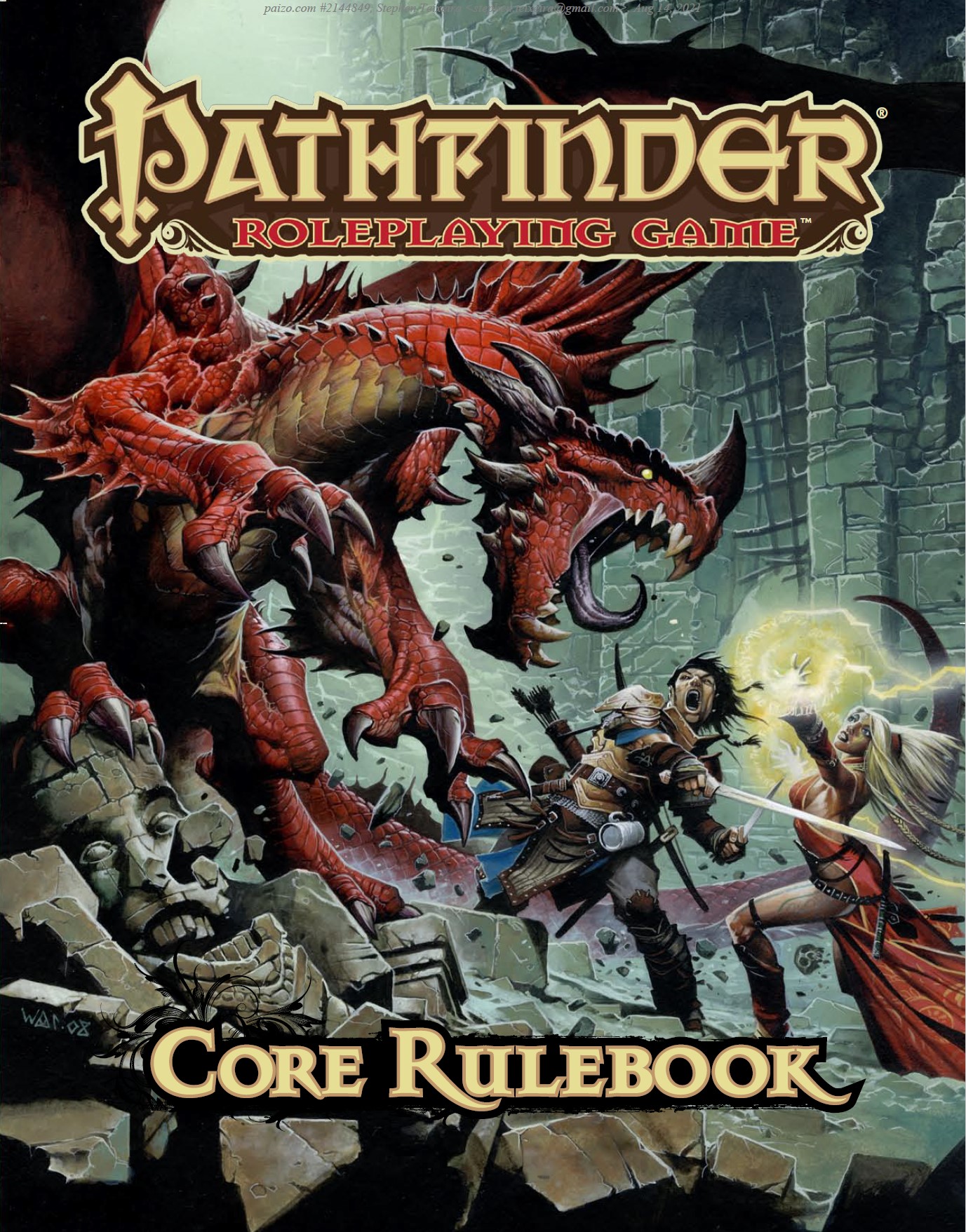
I do think Pathfinder 2e needs its "thing." Some of the recent books have expanded into "high magic" and "steampunk" areas, and those are interesting but also they feel a little like genre-changing books. The Guns & Gears book dabbles in the pre-Industrial era gunpowder siege warfare time with black powder cannons and artillery.

Has the Pathfinder world moved onto a Victorian steampunk reality? Or is this still Renaissance-era fantasy? To me, the former would be how I run this - I have done my time in Golarion with the thees and thous of the fantasy era, and for 2e to feel like a thematic shift, I would dive straight into airships, clockwork cities, and the slow creep of that pre-Industrial era grime and ash-covered reality.

Which probably sets up something very interesting...


Know Your Enemy

Secrets of Magic? Meet the enemy. Guns and Gears.

On one side you have magical orders, wizarding guilds, and those who believe in the practice of magic. The old guard knows what is coming. They watch as the old ways are being replaced by the march of technology. Intolerance, suspicion, and hate for the practices of magic are growing. They know as the armies of the world grow, the places of magic shall be destroyed, and even powerful creatures like dragons shall be driven extinct.

On the other, you have greedy corporate steampunk conglomerates, ruthless strip mining operations, trading guilds, forced servitude, the advent of banking, and the greedy governments who feed off of technological exploitation. They want to turn cities into coal-burning industrial era hellholes. They want populations to grow uncontrollably. They want to chop down every tree and strip mine every hill, poisoning the water, factory farming, and stealing every resource for themselves.

And the governments of the world smile and support them as the gold is handed over. A few more payoffs and easy lives for me and my family, please, thank you, and we will look the other way. Whatever war you want to have over there, of course, we shall support it! Conscription shall begin among the poor shortly.

And I am sure the new Book of the Dead could be introduced as a third faction in here somewhere...


Not a Happy World

Pathfinder 2e presents this Disney-style world suitable for kids. This gets tossed out. Absolom's money, reach, influence, colonialism, and greed become a corrupting force (think the British Empire or American Exceptionalism). I am given permission to include all of the above themes on pages 43-44 of the 2e Gamemastery Guide. All of the below are allowed in my game:

  • Corruption
  • Devastation
  • Extremism
  • Mayhem
  • Subjugation

Only this is happening on a world-level scale. And the fight is between magic and technology.

I know, "The technology is powered by magic!" But once you think about this concept for a while, you see it as technology subjugating magic as a power source. Magic should not exist without the machine. Those who do not use the machine to use magic are a problem. Why?

Control the machines, and you control magic.

And you control the machines when you control the production of them.

And you control the production of them when you control the resources used to make them.

Once you control the world, you control magic.


My Pathfinder 2e

Really, this lens for seeing Pathfinder 2e excites me. It creates the "next big evolution" in Golarion as the forces of old try to keep this world from turning into some twisted steampunk version of Earth. The industrial era is coming, and those who want magic to be free and for everyone will be the enemy.

This is what happened in our world. We got the Industrial Revolution followed by the genesis of modern capitalism. Wars were started for profits. The world's environment suffered irreparable damage. This may sound like socialist theory, but even those who believe in free markets know all this is true.

Part of the fun here is the tangential factions looking to twist this war to their advantage. The realms of the dead, demons, devils, dragons, humanoid factions, cults, cabals, followers of gods, and all sorts of others looking to interfere, make things worse, or step in and take over for themselves are all the seeds in which adventures are born.

While the world was busy fighting with each other, no one saw something worse taking root and threatening us all...

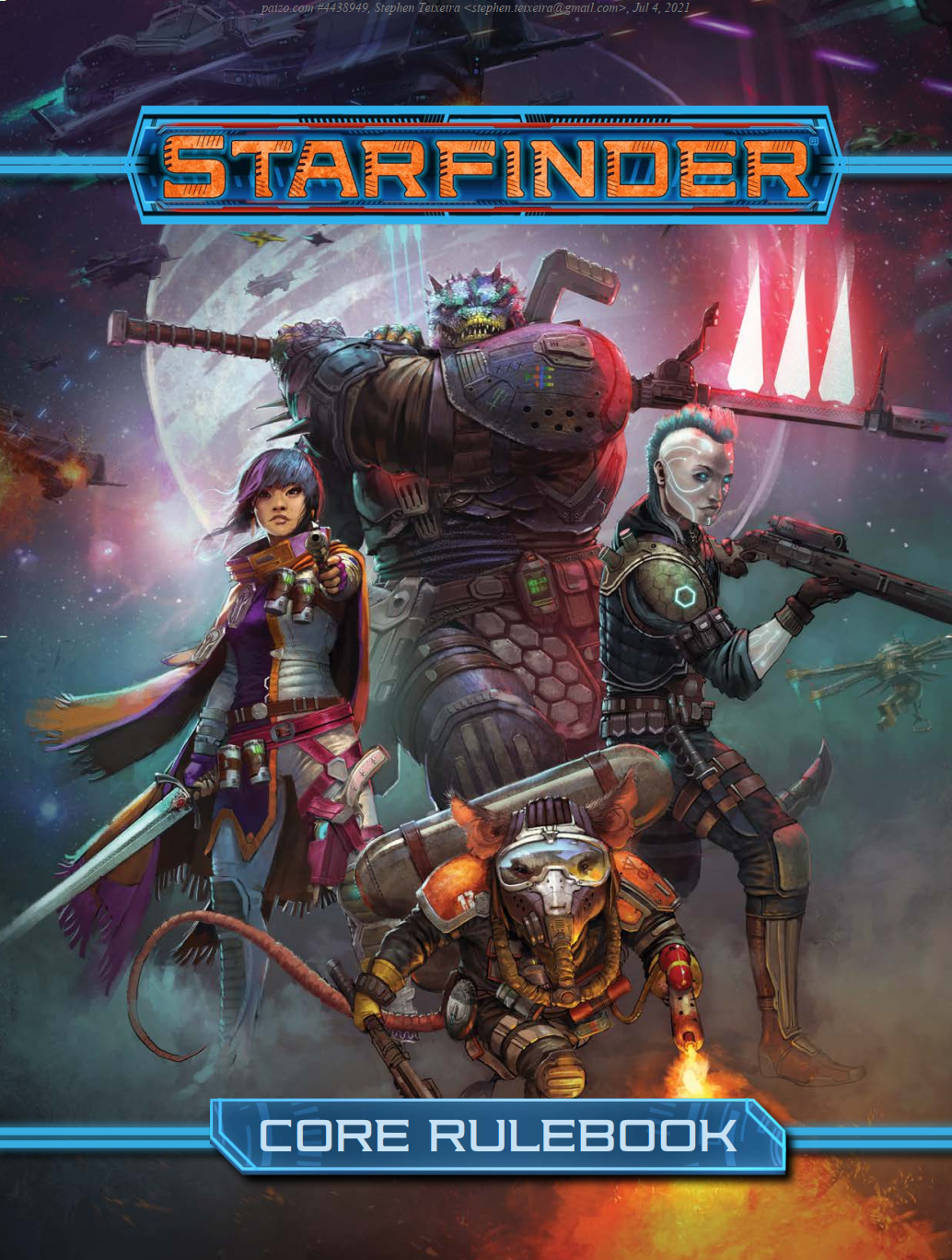
Starfinder: Much Better as a Hexcrawl

No shade is thrown at those who play the adventure paths and love them, but I have been playing Starfinder as a hex-crawl and love this. This is my sort of Heavy Metal-inspired randomly generated world, where all the ancient civilizations on these worlds were Pathfinder 1e, the worlds destroyed and forgotten over millennia of war, and then sci-fi civilizations try to tame these worlds and setup cities and colonies on them.

And those sci-fi civilizations are all at war with each other to control the only supergiant solar system in the galaxy. A "throne world" system so large, with so many worlds, with so many ancient treasures and raw resources the faction that controls this system can set up an empire that lasts thousands of years and will reach thousands of light-years away.

So these worlds have ancient temples in them (hello reused Pathfinder 1e dungeons), and sci-fi factions constantly invading, landing mercenaries, conducting starfighter raids, hiring defenders, exploring, settling, repairing destroyed infrastructure, and building armies to try to hold these precious worlds for a while. You have free traders and mercs operating their own fleets and selling services, planetary directors in charge of rebuilding and exploration, and all sorts of stuff happening.

Lost Pathfinder 1e magic items like +2 swords and staffs of wizardry and priceless artifacts. There are black markets for things like that, and groups interested in ancient magic that would pay - or kill - to have them.

And between planets, starships roam, setup no-go zones, control space, piracy & trade are rampant, and there is a lot going on up there.


Beginner Box

Part of why I felt so turned off Starfinder was my beginner box experience. The money was too tight. Rewards were strictly controlled. You were given a free starship. The story felt a bit like a railroad and had you working for undead factions that your lawful good space paladin may honestly never wish to even associate with. There was a bar encounter that felt like it assumed combat (in a packed nightclub) and did not really present alternate ways to resolve the problem, like hacking, sneaking in when the place was closed or other "great idea" sort of approaches.

And it did not feel like it had that sense of freedom that I wanted from a sci-fi game. Yes, the beginner box is excellent for teaching rules and concepts, but what I love about sci-fi is not structured story scenarios - it is the freedom to go anywhere and do anything. Playing this adventure I felt there was not much else out there beyond the story. There was another dungeon level that you could fill in yourself as an expanded part of the experience; but I would have loved a mini-area of a moon, a bunch of hexes, that the team was hired to explore, and you were free to fill that in with suggested locations, mini-maps of destroyed stations you could put down and fill in, resources and treasures to find, and even some of the hexes start a small starship battle.


More Hex-Crawl Please!

I now have the freedom to help a faction settle an area of the map, sort of like Kingmaker, or become a leader in the faction myself. I can even hex-crawl in a starship in space if I create a map of an asteroid field or an uncharted area of a moon. There are probably space stations (for different factions) with tons of missions to take, like cargo hauling, starfighter raids, rescue missions, recovery ops, VIP transport, passengers, and any other thing you can imagine.

Money is still tight, but with infinite random encounters, dungeons, and resources out there that is my problem to solve - not what the module will give us next (and we will be disappointed again they are being too stingy with rewards).

That alone is a huge change.

You want money for gear?

Get off your butt, there are plenty of unexplored hexes out there and random tables to roll on. Better yet, make a deal with a faction interested in the area to clear those hexes out, for a price, so they can resettle them and rebuild those ruined agricultural farms, hydro stations, and monorail lines.

And take all the loot sitting there as bonus cash.

Maybe you will even find lost ancient ruins.

How much do you think 700 ancient gold pieces will get us again? Are they worth more melted down or to a collector? Can we find a collector? What about this strange knife that radiates magic? And this scroll with this ancient writing on it? How much do you think it is worth? What about this wand? Do you think even asking around is going to make us a huge target by black-market thieves? Can we use any of this stuff?

And we need a mech if we ever want to take care of that purple worm living at the Ag-Farm. Gonna be expensive, but the reward will be worth it. And I am sure once we go down in the worm tunnels we will find even more loot. Bring a flamer.

And the setting I created too, a near-infinite system of strange worlds, ancient ruins, hundreds of factions, and open wars with each other keeps things interesting and gives me that Heavy Metal vibe I wanted. I don't want "quiet planets mostly at peace with each other" - I want conflict. I want multiple factions in every world - and between them - and a situation that keeps changing. It is rare for one faction to control a single world. Installations are won and lost. The battle lines change. Factions take losses and look for help. Evil factions grow in power and need to be pushed back. Ancient factions, such as dragons, still live on these worlds and deal with outsiders.

Good stuff.

Monday, May 2, 2022

The D&D Style of Fantasy and Skills

One of the criticisms during the Satanic Panic of the 1980s against D&D was one we actually agreed with, that D&D was mostly about killing things. We sort of grew bored with D&D's combat-focused gameplay and shifted away to more skill-based games such as Aftermath, Space Opera, Traveller, Star Frontiers, and others. We liked the idea of characters being more than just hit points, attack bonuses, an AC, and a pile of spells and magic items.

To be fair, classic D&D is more about problem-solving than combat, and combat is best avoided anyway. The stigmas stuck though, and we saw a lot of other games with a better skill resolution mechanic, so we jumped ship on both D&D and AD&D by the late 80s.

The game got stigmatized by a lot of religious and parent groups, and to be honest, a lot of wounds were self-inflicted. You try to push a game with devils, naked demons, spellcasting, thievery, evil, and the concept of killing things for their money - to kids - and you are going to get some heat. College kids? Okay, fine. Yes, we played this game heroically, and it was about defeating evil, and our mom got it and loved our hobby.

There was this shift back to "story XP" and "roleplaying XP" in AD&D 2nd Edition that attracted us back to the game, and that seemed like a huge innovation for us at the time. There were non-weapon proficiencies, but still, they did not hold a candle to fully-robust skill systems in other games such as GURPS, Rolemaster, Runequest, Palladium FRPG, and others. Still, the notion of a more story-focused D&D had us playing back in the OG Forgotten Realms (pre-novels) and having all sorts of pulp action adventures there.

Skill is a one-syllable word. Non-weapon proficiencies are seven. Why they just didn't call them skills is a mystery. I know, because they had weapon proficiencies, but it is a terrible name. Do people really need to be told these are like weapon proficiencies but for these, they don't require weapons? I swear these games were so much about killing things even the internal logic was screwed up, but I digress.

Our game ended in over-powered wizards being nearly invincible, so the same old problems came back to haunt us in this edition as well. The changes they made to make the game less "killing things" oriented and more "story and roleplaying" oriented were a success for us.


More Skills

With D&D 3 and Pathfinder, a skill system was back in the game, and we had fun with this. We did not like that some classes got fewer skill points, but it felt like a step in the right direction. I am still having fun with the Pathfinder skill system, and I am always pumping up those INT scores to get more skill points per level. Skills are fun, but Pathfinder is still a legacy D&D-style game, and skills do not feel like the central focus of the game. They are still very much an add-on system, and there is a balance between killing, looting, story, and roleplaying that feel well-represented with XP awards.

Skills are very fun. With my Aquilae solo playthrough, I found that skills are most of the fun of my game. Social skills, survival, figuring things out, searching, managing towns, crafting, navigating, and using skills to get around the world and live within it are how I interact with the world.

Without skills, it is hard to do solo play and figure out, "What happens next?" Solo play is what is really giving the skill system a workout, and it always feels good to improve a skill you are using heavily, you are developing through interacting with those in the town, or you need just to survive.

And this is where Pathfinder sort of falls short. The game has a good skill system, but it isn't a great one. I sit at my game table with my solo play rules and wonder what a great skill system could do for me, and I start looking for alternatives.

It is hard to give up on Pathfinder, as I have two shelves full of toys to play with there. However, a lot of those books introduce parallel systems that could be done away with if the game's core was a cleaner design. I look for a game with a great skill list and a unified core design mechanic and I am considering switching to GURPS or Dungeon Fantasy for my playthrough now.

Why?

Well, do I need all those toys? I can convert monsters in pretty easily. Classes and powers have parallels in Dungeon Fantasy. A lot of the books, if I were to really sort them out, I don't need once my system is unified. Books that add class options? Not needed. Books that add horror or occult systems? Not needed, I have these rules in the base game. Magic items? Dungeon Fantasy has plenty. NPC stats? Got them. Honestly, really just monster stats and variety are the things I need.

If I need this much.

There are times Pathfinder feels like too much information.

But with GURPS/DF, I get an advantage and disadvantage system that affects solo play directly with strengths and weaknesses. These can change social interactions. I can pick and choose them. I also get one of the most detailed skill systems to play with, so my fun of picking skills, improving them, and letting a character develop naturally is about 10 times better than in Pathfinder, since this is a point-buy system. And if a character gains magical mutations and extra powers? Bio-Tech or superpowers can be added to a character easily. I don't need to hack it or say it is so, there are already rules support for all of it, and no extra books are needed beyond the few I have.


The D&D 4 Tangent

While we liked D&D 4, one of the odd notions is the skill system got massively simplified and also shorthanded. The whole notion of "passive" skills got rid of rolling as this assumption of atomic failure was ignored. We always assumed atomic failure for skill rolls in our games, if you failed the skill roll once, that was it, no retries for the day. With d20, there is this "roll until I do it" assumption built into the game, which ignores critical success and failure by "taking a 10" or "taking a 20."

Pick a lock? You should roll, because a critical failure may mean you break your tools or the lock itself and no further tries can be made. We hated the whole "take a..." rules and never used them since they seemed to justify bad player habits and weak DM-ing.

I don't need to think of another way around this problem, I will just keep rolling this d20 until it is round and I get the number I want! And I cannot critically fail! You do not get to break that lock or my tools!

So as a result, we disliked passive perception and passive everything else. If you failed, you failed, and these were our Vancian skill checks, one try, for one thing, per day. Miss something and you do not get to re-search until you find it. Blow a social skill roll, and that person is likely not going to listen to you if you keep repeating the same argument.

"But I wanna! But I wanna! Give me a discount shopkeeper! Come on! You are being unfair! I wanna!"

The above happened at our table once. A player thought with each thing they said, even if it were just drivel or repeated statements, they were entitled to a skill roll. To us, the entitled player rolling until they got what they wanted, became the poster child of taking a 20.


Vancian Skill Checks & Fail Forward

From that day on we instituted the Vancian skill check rule. Skill levels mean something. A die roll means something. There should always be a chance of critical failure or success. And we saved just as much time since we were not allowing dozens of rolls.

And we didn't design our adventures so a missed skill roll created a dead end. We did the fail-forward thing, where a failed check usually meant things got harder or more complicated, but it never stopped progress.

You absolutely need to pick that lock to continue and you failed? Perhaps you picked the door, but when you open it you failed to notice the ear-deafening screech the rusted hinges made. Maybe you opened it but busted your tools. You get a dead-end skill check in a poorly-designed adventure, and you automatically fail-forward it, roll once, and move on. It is not worth killing your game over and pissing your players off.

In fact, fail-forward eliminates the need for passive anything and is a simpler rule. You don't have six players at a table with a bunch of passive skills each acting as a radar for the DM to miss something, and then you are rewinding the session multiple times because "we shoulda..." If they did not think to make a check, they did not think to do it. If there is a secret door in a hall they walk right by, they miss it. I know, then players will be wasting time searching everything! Well, no, the adventure could just suck for putting a secret door there with no clues. Make a clue yourself and throw it into your description of the hall, "A long hallway with many loose flagstones on the walls."

D&D 5 continued and expanded passive skill checks, and we were not really impressed by that part of the game all that much. We did not like offloading all of the skill tracking onto the referee with the passive system (X skills times Y players), and it began to remove player agency with a person deciding, "My character does something..."


System vs. Content

If I continue with Pathfinder for my Aquilae campaign, I have Hero Lab, tons of content (spells, classes, monsters, and items), and a rules system that works good but is less focused on skills and character building. The sheer quantity and variety of content are amazing, and the system is good. Part of me feels I have so much content I will never use it all or hope to. The ability to solo is good. I know the system well and it works.

If I use Dungeon Fantasy, the character is king. I have GURPS Character Assistant 5, and while not as easy to use as Hero Lab, it has far more power. There is still a lot of content, and probably more than I will use, but Pathfinder 1e dwarfs that with a metric ton of things to play with. I would put the system on par with Pathfinder 1e in complexity.

Where GURPS-based systems shine is in versatility. I have infinite options to put together a unique character, and I can go the structured Dungeon Fantasy route or completely freeform - or mix and match. The advantage/disadvantage system (not the same definition as 5E) for character building is mind-blowing. The skill system is huge and one of the best - not the easiest or simplest, but your skills define you.

That last statement, "your skills define you," makes a huge difference in solo play. A lot of the time when I am soloing I ask the solo-oracle questions directly related to skills:

  • Is the door locked?
  • Is the NPC hostile?
  • Are there guards nearby?
  • Is the device broken?
  • Is the weather turning bad?

A lot of these questions directly set up skill rolls. Yes, there are guards, what is your stealth skill? Yes, the door is locked, do you have lock picking? If the machine is broken can you fix it? If the weather is turning bad do you sense that with your survival skill?

A solo-play system takes a deeply skill-based system and makes it ten times better. Without solo play, my brother and I liked systems that aggregated skills into broad categories, because at the table we wanted faster play and simpler resolution. For me as a referee, more general skills and less of them were easier to manage.


Solo Play

When I am alone, my tastes change. I tried solo play with B/X and it did not captivate me. The characters felt too simple, and I was asking broad questions with easy answers - are their goblins patrolling? Yes! Fight. The answers were mostly, do you fight something or not - since the game's roots are mostly in combat and combat resolution.

With a skill-based system, I am asking questions like, is this a problem related to a skill I know? You just don't want to be narrowly focused on your character sheet, there are problems out in the world my characters will know nothing about - and they will need to find NPC experts. If the problem is in my character's set of skills, what logically is it?

With Pathfinder, the solo play was way better than B/X because all of a sudden problems relating to specific knowledges started to come up. My character started to feel like an expert, and I wanted to start buying and improving skills related to the problems they were facing.

GURPS has advantages and disadvantages, like being hunted by enemies. These can create more solo-play situations easily, the chances are built into the character sheet, and they come in all types and categories, even social situations. GURPS also has a deeper skill system, and I can imagine my solo play getting even better as these items come up and I am problem-solving with them. I get that excitement of being able to drill down, improve my character in specific ways, and spend points on new skills and abilities as I go.

I do have less content by an order of magnitude, but what I gain is a depth and flexibility of character building that the solo play will feed into and enhance.

Sunday, May 1, 2022

Pathfinder Magic Weapons in Starfinder

So in a mixed Pathfinder - Starfinder game the question comes up, how do you handle magic weapons?

Just treating them as normal Pathfinder weapons will not make them awesome. Seriously, I would toss a +3 longsword away around level 8 when the better weapons come online. Starfinder exists in this strange reality where melee weapons can do a LOT of damage, so here is what I did, and this works within Hero Lab Online.

For every "plus" in damage, add one base damage die. Make these custom melee weapons so you can change the name, and add the hit modifier after the fact, so this +1 longsword would actually attack at melee +2 and do 2d8. Ignore the +2 damage of Pathfinder and only up the base dice.

This makes weapons up to a +5 do 6d8 S damage with a hefty to-hit modifier, making them viable all the way up to level 18. The white-star plasma sword at level 18 does 8d8 E & F damage but does not get the very nice and possibly unbalancing +5 to-hit modifier. Less damage, way better hit, feels like a trade-off, especially when you consider the level 20 plasma sword doing 10d8 E & F damage.

That +5 sword is still gonna be viable against tougher targets even at level 20 since it will hit 25% more for a little more than half damage of the big one. Still, against a nearly invulnerable foe, that may make all the difference. Also, if the sword is flaming it will do S& F damage, so more modifications are possible given the weapon's enchantments.

This will make all those magic swords, daggers, axes, and other ancient weapons lying around those ruins and tombs in my current campaign all the more valuable and attractive to players, collectors, and anyone else wanting to get their hands on some old-school pointy steel.

Hero Lab Online: Starfinder

I am back in Starfinder for a while and decided to check out the Hero Lab Online (subscription, expensive) product for creating characters. In my first campaign, I used the Starbuilder app (an excellent app, one price for everything), and as I suspected there were differences between the characters I built.

My one issue with Starbuilder was having to use Android to manage characters. I have an Android tablet, but I love typing and working on a PC screen so it was an annoyance to have to cloud transfer the PDFs around so I could have them elsewhere. I just work faster and more free on a PC, where I can look for character images, type a lot of text quickly for backgrounds, and generally work more comfortably than on a tablet.

Also, Pathbuilder 2e (the Pathfinder 2e app) is coming out with a free web version, which I find highly interesting.

Hero Lab Online is very nice. They made some strange UI choices where I am chasing down errors in different tabs, the equipment lists feel arbitrarily divided up between tabs, and I do miss editing the data files or crafting my own - maybe they will implement this in the future and let us create custom entries. Some of this is due to odd choices in Starfinder where mechanics have to have a "custom rig" attached to a particular type of tool kit, you click on the error, and it does not tell you where to go, what to buy, or what to do. They have special pieces of equipment called things like "hacking kit w/custom rig" that you buy and the error goes away.

Also, my complete Pathfinder 1e Hero Lab collection is now online. Very nice. Considering I can use anything in Pathfinder 1e in a Starfinder game, this doubles my content for monsters, races, characters, and all sorts of craziness. The subscription fee? Not too bad, but I have a lot of Starfinder books I want to have fun with, so I either pay up and have a tool that makes my life easy, or these are going back in a box and I am not having any fun with them.

So, why back to Starfinder...?


Pathfinder 1e

Sorry, Pathfinder 1e is still a great game played by many people, and I have 13 years of books I can use with Starfinder. Now,  I can't go an give a Starfinder character the Pathfinder alchemist class, but I am free to have an alchemist NPC as a part of a campaign. I can toss a purple worm at the party and watch them blast it with rocket launchers. I can use a classic Pathfinder 1e vampire and put her in a starfighter. Any one of the classic dragons can show up, wearing powered armor with miniguns on the sides of their helmet and air-to-air missiles mounted on their back.

Lucifer himself from Tome of Horrors Complete could show up and start demanding planets surrender to him, and then sending his generals around to conquer worlds and the players racing around trying to stop his dastardly plans in epic adventures and massive star battles.

Lucifer, from Frog God Games' Tome of Horrors Complete

Cool stuff.

Heavy Metal stuff.

Kick ass, wild ass crazy stuff Appendix N sort of stuff we only get from Dungeon Crawl Classics. But this time with heavy weapons, mechs, starships, tanks, fighter jets, and freaking lasers.

Guns, lots of guns. Rock music too.

The true "Pathfinder in space" stuff we were promised.

Stuff I have game stats for and is 90% compatible with Starfinder (conversion guide in the back of the main Starfinder rulebook).


The Campaign?

I am staying away from the Starfinder adventure paths, maybe I will steal parts as filler, but the campaign I want exists hundreds of years in the future, way out on the edges of explored space, so far away from Absolom Station that people derisively call that place "The Core" and they live in an area of space called The Shattered Expanse, a frontier area of former fantasy worlds and civilizations that gone sci-fi. That Heavy Metal campaign of countless worlds and endless wars.

Those sci-fi matte paintings of a planet, with a few giant planets in the sky, with moons around them, and more moons painted in for good measure. And every one of those giant planetary moons that should cause massive tidal waves on this world - every one of those planets is a hexcrawl.

And there are hundreds of moons and planets in the central supergiant star of this area of space called Titan, and they are all being fought over by different space factions. You conquer Titan, and every star within hundreds of light-years shall be yours just because of the wealth, resources, raw energy, and space for the population you will have.

Systems like this are the throne of empires.

And there shall be good factions, space paladins, space orcs, star elves, scheming drow in space, neutral factions, dwarf miners, goblin traders, kobolds and space dragons, space demons, undead moons, gnoll space pirates, hobgoblin mercenaries, space vampires in giant goth temples, good guys, bad guys, races of robots, android societies, and whatever.

I start off simple, on a resort world (generated with the tools at donjon) ravaged by war, between the space paladin factions and the star demons, with opportunist space orc raiders coming in to try to stake a claim here, and expand from there. Put a neutral corporate faction, allied with goblin traders (the more World of Warcraft corporate goblins and not Paizo's) trying to hire mercenaries and reopen the resorts to make money.

Since all of these worlds were once "Pathfinder 1e fantasy worlds" and have been for thousands of years, lots of lost civilizations, temples, old-school monsters, magic items, scrolls, artifacts, magic +2 swords, and other powerful stuff lying around - and adventures and exploration to have. Maybe there are even forgotten civilizations of people that don't know anything is going on out there and are still living in medieval villages and grand castles. Lost tribes of lizardmen. Dragons that plot to manipulate the outsiders. Elemental temples of evil.

Subdivide these 20-mile hexes into 2-mile mini hexes, stock them randomly with ruins, lairs, encounters, crashes starships, small settlements, and all sorts of hex-crawl crack and we are good to go.

Heavy Metal: The Hex Crawl featuring Starfinder with special guest star Pathfinder 1e.

I am keeping it simple.

Everything Pathfinder 1e compatible I got.

In one epic hex-crawl game covering multiple worlds and all the space between.

Sci-Fi Games: Magic Space Vans

The term "magic space van" (MSV) for those do-anything starships that are more plot advancement devices than actual pieces of machinery that have function and limitations fascinates me. When you think about it, a starship is a complicated piece of machinery, a lot like a passenger airliner, that needs quite a bit of support, maintenance, mechanical checks, fuel, special operation procedures, and technical expertise to operate. In movies and fiction, the magic space van needs none of that. You just get in and go, just like a car you never need to take in to the garage or refuel - it just works.

The result is this vehicle that should require a good bit of skill, money, time, and limitations to operate, but it just exists as a story tool to get characters from point A to point B in the story without trouble. And if the referee ever uses the ship to make the game more realistic, the players roll their eyes and wonder why the referee is being such a jerk by slowing down the game between combats.


When Starships Become Teleport Spells

The ultimate magic space vans are in Starfinder, and they are given to the players for free to enable space travel, which, really isn't space travel it is just getting you to the next plot point. The upgrades are free and given to you by factions, and you can't find a starship cost chart anywhere in the game. The game seems like it gave up on starship economies, running cargo or passengers, buying upgrades, managing costs, repair costs, and every other economic impact of a starship. Starships in Starfinder feel like "adventure teleporters" that get you from one scene to the next.

There is starship combat, but it feels like a minigame instead of something the characters were built to excel at - all of the classes of the game were built for ground combat in mind, with starship abilities being add-ons to each class. The d20 Star Wars bias of "please don't make me play a pilot character" is a huge influence on the design here, as the game is focused on killing things with d20s in personal combat, and starship skills are "oh this class can do that too" handwaves.


Starship Economics

It felt wrong to me, like the designers either gave up on the entire starship economics system and assumed a socialist starship model of gaining ships, upgrading them, and letting governments or factions burden those costs behind the scenes. I can get why, our first Traveller campaign lasted one adventure when our PCs found a derelict ship, sold it for 8 million credits, and the now-millionaire characters retired after their first mission.

Yay!

Oh, we were really stupid kids back then and we never understood the fun of purchasing and managing starships in a broader economy. D&D trained us "the game is all about money" and since Traveller did not have levels or character improvement, we felt there was nothing left to do or achieve.

Star Frontiers changed the math and had a good upgrade, purchase, and cost game. We had a lot of magic space vans in this game and those always took away the fun of exploration and adventure. In the basic game, you were hex-crawling and exploring worlds. When Knight Hawks arrived, you were flying over the maps in your magic space van wishing times were like they once were and you were down there hex-crawling and exploring.

In a way, Knight Hawks did ruin the main game and remove the focus of pulp adventure and planet-crawling to "high-level starship adventures." We loved the base game, and we felt Knight Hawks was fun, but the focus of the game shifted noticeably and those fun planetary missions became afterthoughts.


The Mother of All MSV's

Of course, the archetypical magic space van was the original Millennium Falcon, and that ship will remain indestructible until the end of time, and even then the promise of corporate profits will keep that ship around as the legacy of the universe. Even in the sequel movies, this ship sits around for decades and just works perfectly without any apparent maintenance or care. I love the original movies and the ship, but hey, nothing lasts forever.

It is a bit foolish to put a piece of metal on an altar and worship it.

Someday it will break down and get sold for scrap. Or be destroyed in a blaze of glory doing something heroic, if lucky.

Our games were plagued by these too, these flying boxes that ruined all exploration, travel, and mystery, and the players could park them next to a threatened village of space creatures and blast away at the invading aliens with starship weapons. It got to a point where if I took the ship away my players felt insulted that I was taking away the easy answer. Then again, the design of the game and the rules made the magic space van the easy answer each and every time.

The game sucked and the universe sucked, and how we were playing it sucked.

There is no difference at that point between a magic space van and the players' teleporting castle and where they raise their pet dragons.


We're Sorry, Your MSV is Currently Offline...

Star Wars is partly to blame, it invented the cultural trope of the starship being this go-anywhere, do-anything flying house. At least in the old movies, the starships broke, were captured, got submerged in a swamp, and generally were not 100% reliable. As time went on, they felt more and more invincible. and we played a lot of games with these, and yes, even Traveller is guilty. A scout courier with a laser turret with a missile launcher is a powerful ground support weapon, it can land practically anywhere, go in and out of atmospheres without problem, and has weeks of fuel to burn jetting around in-system.

Some of the adventures for this game go out of their way to tell you "why you just can't use the starship" to solve different parts of the mission. You know your game has a problem if you are constantly trying to tell people why the magic space van does not work. The volcano has too much ash to fly near and is unstable! The local authorities do not allow spaceships above the nature preserve (take the boat on the river please, nudge-nudge, wink-wink)! Spacecraft flight in this area is too risky due to electromagnetic storms! The player's ship breaks down, oh no! As  I player even I would feel the railroad coming, roll my eyes, and begrudgingly accept the "reason this time" but know the game's starship entitlement systems are in desperate need of repair.

They are the prototypical "adventure ships" and that is probably the worst term to use from them since they take away any chance to get out there and adventure, without GM fiat and artificially saying "why they can't use the starship this time." The ship solves 90% of the adventure's "adventure" while the players just do a few social skill rolls and have enough combats to satisfy the video-game urge.

And by adventure, I mean running around, taking a jeep, climbing mountains, taking a boat, getting in a helicopter, and basically acting like the Uncharted's Nathan Drake on a world getting from point A to point B. You know, the cool stuff you used to do before you got lazy and just landed your starship everywhere.


DeltaV

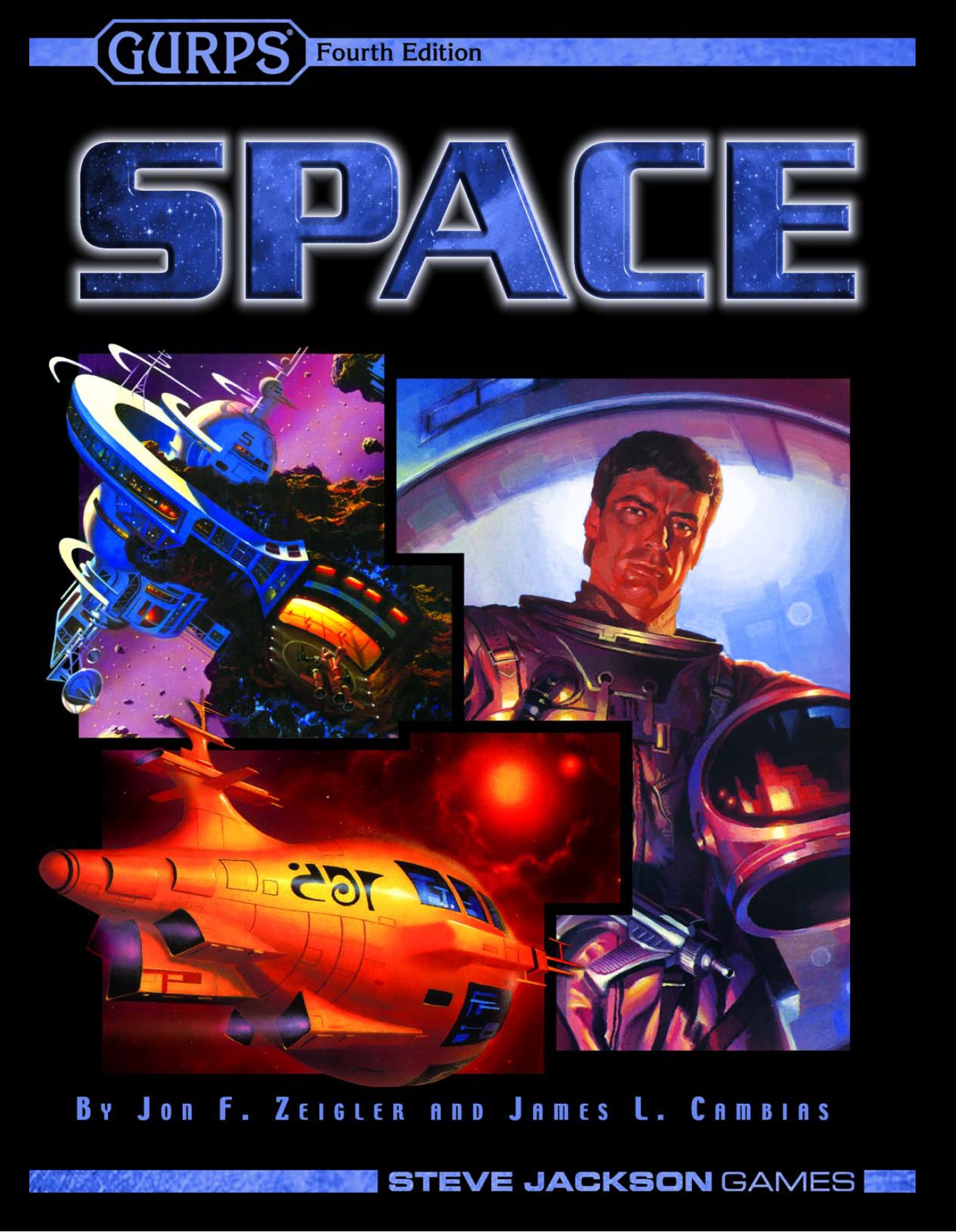
GURPS Space has this term called DeltaV, which is basically a measurement of a reaction thruster's fuel and time. How long can you accelerate for? Well, let's say you have 100 DeltaV and you want to get to Jupiter, or Mars, or a jump point. Well, let's spend 48 of it accelerating at 1G to a speed, stop accelerating, coast for a long time, and then turn the ship around and fire the engines in reverse to slow down. When we are there, we have 100 - (48+48) = 2 DeltaV of fuel let in the tanks. A little left to do orbital maneuvers, and if our ship can land, then land. Taking off is going to use a lot of fuel too, probably way more than landing.

Most ships would not be designed to land, you would have to carry spaceplanes or drop pods (that could carry cargo or ferry fuel) to do that job. You probably have one or two, and you can't lose them (or the pilots). They may be S/VTOL, or they could land like a normal plane on a runway. Fully loaded planes would probably need that runway.

And you know, since a lot of the engines in GURPS Space spew ungodly amounts of radiation, noise, shockwaves, and massive town-sized fireballs; it is really nice of you to land away from civilized areas, forests that can burn down, people in the open that will turn to ash, and places you generally don't want to leave fatally irradiated for a few hundred years.

Even hyperspace jumps would need DeltaV since the ships can't do a hyperspace jump at a certain distance from a star, so they may have to travel a week out to make the jump, and then have fuel on the other side to stop at their destination. The hyperspace jump itself could be just an instantaneous shift, but the flight time would be a long and possibly dangerous journey.

Get a fuel tank hit in combat? You better hope it was an empty one or you ain't stopping when you finally get there, or if your ship is segmented you could jettison 2/3rds of the entire ship and hope the fuel and engine compartments can stop with the reduced mass.

Hard choices must be made. Most of the beloved ship will be space junk, and if we get a new ship and it is still out there, we could head out and salvage it - if someone else has not already. Or pay more money and hire someone with a salvage tug - if you survive - to go salvage it.

But to me, that is cool.

That is sci-fi.

Land a spaceplane on a planet, take a space truck with large tires, and explore. The ship stays in orbit and must be protected by the crew. The space plane and the landing site need protection. Remember how B/X says you always need hirelings? This is what they do. Pay for a few dozen, put them in cold sleep, buy their gear, and defrost them to do dirtside work and security on the planet while your science team checks out ancient ruins.

Maybe you even start your space adventure career as one of those cold storage hirelings, woken up, given a gun and armored vest, and dropped onto a who knows where place to guard a landing zone. And things go horribly wrong.


Hard Frontiers

In fact, I like this idea so much this may be my next Star Frontiers campaign. We aren't doing the typical 1-6G Knight Hawks ships and magic space vans. These things will look like something out of the movie Interstellar. Very few ships will be able to take off from a world, do a jump, and land on another. Giant cargo rockets will constantly take cargo into orbit on hub worlds, and spaceplanes or parachute systems will fly it down.

No reactionless drives. Fuel and thrust are a must.

The great standard races will be there, but space will be a hardcore place.

The universe will be mostly unexplored, except for the main races' four overpopulated home systems.

The home systems will be developed, with lots of activity jetting about between every planet.

A few outposts and colonies will be out there.

And some will be lost as a new threat arises.

That feels like sci-fi to me.